Showing posts with label Progressives. Show all posts

Monday, October 27, 2014

No Country For Young Men


It is difficult to argue that the potential choice of Muhammadu Buhari as the presidential candidate of the All Progressives’ Congress in next year’s polls signifies “progressive change.” A 72 year-old ex-military dictator that seized power in 1983 hardly evokes a sense of forward thinking dynamism. There is something retrograde about seeking the leadership of a septuagenarian in a youthful country where well over half the population is under 40 years.  

It is also unfair to ask eminently qualified politicians currently in their forties and fifties to “wait their turn” in favour of a veteran who had his turn in the early 1980s and who has since had three unsuccessful presidential bids. It is a sordid indication of how the political elite stagnates this country. This is not about ageism. In 1996, U.S. president Bill Clinton was challenged by the septuagenarian Republican, Bob Dole. Much was made of the challenger’s age but Clinton simply said, “I don’t think Bob Dole is too old to be president. It’s the age of his ideas that I question.” Societies rejuvenate themselves with fresh ideas and the idealism of youth.

Whereas Olusegun Obasanjo was elected in 1999, twenty years after handing over to President Shehu Shagari, Buhari is seeking the presidency three decades after his stint as military head of state and is thirty years out of date. That Buhari, who has already had three failed presidential campaigns, evidently cannot perceive a non-aspirational role for himself as an elder statesman and a mentor to a new generation of leaders does him little credit. He fleetingly considered this role when he announced his retirement from politics in 2011 but apparently found it unappealing.


Consider that Nuhu Ribadu spent his national youth service year interning at Dodan Barracks while Buhari was head of state. At the time, Babatunde Fashola was a student at the University of Benin, Rabiu Kwankwaso was already a working class professional and Rotimi Amaechi was a student at the University of Port Harcourt. Adams Oshiomhole was already a frontline labour activist leading the 75, 000-strong textiles and tailoring workers union while Nasir El-Rufai was running his own quantity surveying practice.

It would have been drummed into these men that they were the leaders of tomorrow. Thirty years later, their generation is being enjoined to postpone their aspirations and accommodate Buhari yet again. Indeed, in 2011, the Action Congress literally sabotaged its own presidential candidate, Ribadu, so as to enable an alliance with Buhari. The leaders of tomorrow have become the leaders of next tomorrow. Fashola and company would have to be in their late sixties or seventies before their “turn” finally arrives.

The insinuation is that Nigeria is a gerontocracy and young minds are being inseminated with the pernicious idea that leadership is the preserve of the elderly and that youth, rather than being a time of visionary derring-do, is a period of indentured servitude to living fossils in public life. The result is the permanent infantilization syndrome which sees middle aged men proudly posturing as “boys” or “yoots” and serving as hangers-on, man-Fridays, pimps and court jesters to geriatric power-mongers.

Strangely, Buhari belongs to a generation that did not practise the same fawning veneration of aged predecessors that it now demands from the rest of us. It was Buhari’s generation that forcibly retired the founding nationalist patriarchs from politics by terminating the First and Second Republics. The “labours of our heroes past” commemorated in our national anthem refers to the patriotic exploits wrought by the nationalist generation in their youth. Indeed, the leading anti-colonial political party was appropriately called the Nigerian Youth Movement formed in 1933. Our most epochal acts of political deliverance have been prosecuted by youthful Nigerians whether it is the nationalists that earned our independence or the pro-democracy movement that terminated the military era. Visionaries, not veterans, will propel us to the next stage of our national evolution.      

The not entirely unfair portrait of today’s young Nigerians as politically neutered, demobilized and “deconscientized” hustlers who hire themselves out to vested interests as brigands, laptop-wielding character assassins and mercenary mudslingers is duly noted; but the fruit does not fall far from the tree. The state of the youth is also the result of the deliberate sabotage of the civil society institutions where civic consciousness is nurtured – an act of social subversion for which the military regimes of the 1980s, including Buhari’s, are responsible. 

Considering the generally agreed upon narrative that Nigeria has been done in by past leaders, especially its military dictators, it is difficult to see how Buhari can escape some indictment. But poor leadership is not merely about abuse of office or corrupt enrichment; it is also the inability to resist the siren songs of Messianism and popular idolatry that tempt vulnerable egos into the prideful belief that they alone are infallible and incorruptible enough to wield power. Leadership requires the willingness to pave way for others by embracing obsolescence as part of the natural sociopolitical continuum. Great leaders are willing to become non-essential. In this regard, the cardinal flaw of those that Wole Soyinka famously referred to as “the wasted generation” is not that they failed; it is that they remain stridently committed to reenacting those failures and have refused to go quietly into the night.

Tam David-West has cited Nelson Mandela who became president at 76 and a host of other septuagenarian and octogenarian African leaders including autocrats as proof that Buhari’s age should not be a factor. This is absurd. Buhari is not Mandela and surely these sit-tight gerontocrats are one reason why Africa is embattled. He mentioned Ellen Johnson Sirleaf, 78, whose Liberian compatriots are being decimated by the Ebola plague (which Fashola’s leadership was instrumental in curbing in Nigeria), Jacob Zuma, 72, who is presiding over South Africa’s socioeconomic decline and Malawi’s Peter Mutharika, 74, whose country depends on foreign aid for 40 percent of its national budget. In fact, none of the African countries cited by David-West is doing better than Nigeria. He ignored the younger leaders that are running success stories like Ghana, Botswana, Kenya, Rwanda and Tanzania. It is preposterous to suggest that Nigeria’s leadership pool is as thin as Liberia’s or Malawi’s. The notion that in 2014, Nigeria’s only hope is a man who ruled the country thirty years ago is galling.


On April 30, 2006, Thisday published a cover feature titled, “Beyond Obasanjo, Atiku, IBB [and] Buhari: 60 Nigerians that can take the Presidency in 2007.” Goodluck Jonathan was not even on that list although Umar Musa Yar’Adua was on it as were El-Rufai and Oshiomhole. If El Rufai and Oshiomhole were deemed worthy of national leadership eight years ago, why are they not today? If such a feature was published now, there would be even more entrants on that list. This country has options for smart leadership. We need not denigrate ourselves through a lack of political imagination or courage. In that Thisday piece, Segun Adeniyi observed that “the kind of reasoning that ties the fate of the nation to one man is self-serving, shortsighted and insults the sensibilities of most Nigerians.” He was referring to Obasanjo but the same words could be applied justifiably to Buhari’s presidential bid. 

The cause of progressive change is best served by Buhari endorsing a younger candidate thereby placing his followership at the disposal of someone more nationally acceptable. Buhari’s now much celebrated 12 million-vote haul from 2011 and his street level popularity make him a force. But since his followership is largely restricted to the far north by a mixture of prejudicial perceptions, opponents’ smear campaigns, the genuine grievances of those who suffered during his draconian military reign and his own serial PR blunders, he is effectively only a regional force. Endorsing a younger candidate would enable the APC field a challenger with Buhari’s following but none of his baggage.


If the APC was truly trying to make a real statement of “progressive change” with its presidential ticket, it would look no further than its capable cast of governors such as Fashola, Kwankwaso and Oshiomhole (and to stalwarts like El-Rufai) and make a strong argument for competence in our public life. Fashola has run arguably Nigeria’s most complex state and the jewel in the APC’s crown creditably as Kwankwaso has done in Kano, another challenging locale. Any of these gentlemen would enter the presidential race with far more gubernatorial and administrative accomplishments than Jonathan did in 2011. Cynics may contend that these hypothetical candidacies are more daydream than dream team. But it is the very paradigms that make their presidential bids seem quixotic that have to be discarded to enable national progress.


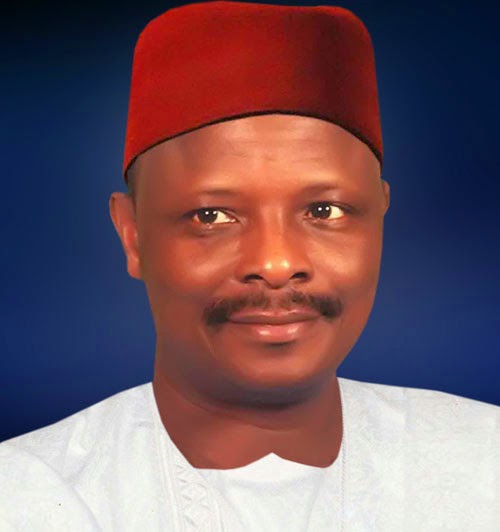
(Images sourced in order of appearance from abiyamo.com, muhdlawal.wordpress.com, famouspeoplenews.wordpress.com and bizwatchnigeria.ng) 

Monday, October 20, 2014

The Opposition's Dilemma


The APC confronts a significant dilemma as it weighs its options and nominates its presidential flag-bearer for next year’s polls. Thus far, the primaries look to be a three horse-race between Muhammadu Buhari, Atiku Abubakar and Rabiu Kwankwaso. These three contenders bring formidable strengths as well as weaknesses to the table.

Buhari commands the allegiance of the northern street and the fanatical adulation of millions who see him as the only one courageous and incorruptible enough to slay the dragon of official graft. A septuagenarian and a former Head of State, Buhari is experienced and also enjoys the peculiar benefit of having a public record that has been burnished by the passage of time. A significant percentage of the electorate were either too young or had not even been born when he was a military ruler. This “demographic dividend”, in addition to a national amnesia about our collective history, has aided his remarkable transformation from dictator to democrat.

Atiku Abubakar is a former Vice President, an experienced and thoroughbred politician with a formidable national political machine oiled by his savvy for wheeling and dealing and his immense wealth. Governor Rabiu Kwankwaso comes to the table with youth on his side, and more importantly, a very impressive stint as governor of Kano, one of Nigeria’s complex and most volatile states. Kwankwaso has shown himself to be both an adept administrator and an adroit politician – a very useful combination in a clime in which governance and politics exist in an uneasy tension.

In an ideal world, the APC would blend Buhari’s popularity, Atiku’s political savvy and machine with Kwankwaso’s progressive energy and drive to create its perfect flag-bearer. It is precisely because it cannot do this that it must reconcile the weaknesses and strengths of these contenders and ensure that its primaries are not so fractious that they fatally damage whoever emerges as the winner.


At 72, this is clearly Buhari’s swan song in elective politics after three previous unsuccessful presidential bids. Elements within the APC leadership favour him because his haul of 12 million votes in the 2011 polls make him a bankable vote magnet particularly in the far north. But there are two problems here. Buhari, for all his popularity in the north, has found it difficult to become a national brand. The manual for defeating him was written in 2003 when President Olusegun Obasanjo’s campaign successfully tarred him as a religious extremist and ethnic bigot. It was slanderous nonsense but the charge has proven potent in our polarized times not least because of Buhari’s occasional flair for untimely verbal own goals and self-subverting soundbytes. It did not help matters that in 2003 and 2007, his party, the All Nigeria Peoples’ Party campaigned as an “Islamic” party in the North.

Secondly, Buhari has never actually won an open and fair presidential primary contest. In 2003 and 2007, he was virtually muscled in as a consensus candidate by ANPP apparatchiks which alienated influential party operatives on both occasions. In 2011, the Congress for Progressive Change which was practically set up as a vehicle for his presidential ambition floundered because it was manifestly a personality cult and lacked the organizational acumen as well as the fiscal and human resources to mount an effective national campaign.

Primary contests are not about popularity. Rather, they test a candidate’s ability to rally party delegates. Buhari disdains the sort of wheeling and dealing that characterizes a nomination process. He perceives himself as being above politics and is frequently condescending to politicians. Thus, he has never been able to win over the political operatives that can secure party tickets in an open contest and has instead typically relied on the anointment of party elders. The fact that his military regime jailed many Second Republic politicians has fuelled a residual elite suspicion of his agenda. The APC’s adoption of a modified direct system for its primaries will allow 300, 000 delegates to participate and this widening of the pool could enable Buhari be more competitive than he might ordinarily have been.


Atiku, on the other hand, is an adept veteran of primary contests since 1993 and is endowed with the sort of personal and political diplomacy that sways delegates. His accessibility is in contrast to Buhari’s aloofness. Kwankwaso also has keen political instincts in this terrain. Both Atiku and Kwankwaso would be far more comfortable in this arena than Buhari but neither of them possesses Buhari’s name recognition or that bankable fund of fanatical devotion that would be crucial in the general election.

It is quite the conundrum. Buhari may be a fairly competitive brand for national elections but lacks the transactional skills for primary contests. Atiku and Kwankwaso have what it takes to fare well in the primaries but do not have Buhari’s following which would be crucial for the national polls. Atiku lacks Buhari’s reputation for incorruptibility and Kwankwaso, despite his impressive work in Kano, must work hard to stamp himself in the national consciousness. In truth, none of these candidates is certain to defeat the incumbent president next year.  


Buhari’s partisans will argue that the party leadership ought to do all it can to ensure Buhari clinches the ticket since he can pull in the numbers. But Atiku and Kwankwaso could counter that the ability to sway delegates in the primaries is not to be scoffed at. It is, after all, a predictor of the ability to mobilize the ground troops for the general elections. They will also point at the rather limited geography of Buhari’s appeal. Having 12 million votes is of no consequence if they are sequestered almost entirely in one region. They will observe that Buhari, despite his adoring legions, has lost thrice to three different ruling party candidates in a decade, and quite rightly suggest that a persistent defect in his brand, whether perceptual or actual, makes him nationally unelectable.

Certain actors within the APC would prefer a “bloodless” non-acrimonious primary process in which Atiku and Kwankwaso step down for Buhari. This is unlikely and Kwankwaso has already reportedly rebuffed overtures to concede the ticket to Buhari. This is fair. The APC needs an open primary contest if it is to avoid self-destructive internecine recrimination afterwards and its leadership will have to avoid the temptation to stage a victory for a favoured contender. From all indications, the primaries will be keenly contested. What happens next will be interesting. 


  Images sourced from  (in order of appearance)
www.today.ng 
www.ynaija.com 
www.dailypost.ng
www.kanopillars.com   

Monday, February 3, 2014

It's Time to Reimagine Nigeria


 (Text of my speech at the commemorative national centenary edition of the Abuja Literary Society’s Night of the Spoken Word on Friday, January 24, 2014)


The idea at the heart of this nation’s birth was racial redemption. At the beginning of the 20th century, race was the barrier that divided the world. The colour line split humanity into an allegedly superior white race and a supposedly inferior black race. The generation of agitators that formed the nationalist movement saw Nigeria as an opportunity to register the black man’s presence in the modern world. They wanted to show that Africans could build a pinnacle civilization of their own. Nigeria was to be a showpiece state and an exemplary nation – incontrovertible proof that blacks had something positive to offer humanity.

In order to achieve this, our founding patriarchs had to have a certain kind of faith. They believed in a cosmic sovereign will operating in history. They believed that this being had impelled diverse communities from far-flung places to migrate over the course of centuries and eventually congregate in this space that would one day be christened Nigeria. They also believed that a force greater than Frederick Lugard’s penmanship had ordained the nation’s existence. Consequently, they did not see Nigeria as a whim of the British Empire but as the will of providence.

Now, the patriarchs were usually fractious on many issues but they were of remarkable agreement on one matter: Nigeria was unique and exceptional. Thus Nnamdi Azikiwe declared that Nigeria would be “a country of consequence” and “a force in world affairs.” As he took office as Nigeria’s first indigenous Governor-General in 1960, Azikiwe declared that Nigeria had a duty to “revive the stature of man in Africa and restore the dignity of man in the world.” Adegoke Adelabu described Nigeria’s independence as “a cosmological imperative.” Ahmadu Bello, who at one point famously described the nascent Nigerian nation as a mistake, predicted that with independence she would rise to become “first among equals in Africa.” Chinua Achebe once described Nigeria as a nation favoured by providence and burdened with a historic purpose that no other nation can fulfill

This belief in Nigeria’s manifest destiny energized the nationalist struggle and earned us independence from the British in 1960. This ended the first chapter of our national odyssey.

Our learning curve as a nation since that time has been steep. We have since learned that liberation is different from nation-building. It is one thing to achieve freedom from colonial bondage; it is another thing to seize control of the post-colonial Promised Land. The journey from servitude to sovereignty has been very challenging. We have been through so many traumas – the fall of the First Republic and the abortion of the heady promise of independence, the civil war, the cycle of coups and counter-coups, the oil boom that gave us more wealth than we knew how to usefully spend, the subsequent era of recession and austerity, the age of SAP, the structural adjustment programme, decades of military dictatorship, chronic ethno-religious violence, terrorism – through all of these plagues, we have survived resiliently against the odds. We are still here. And that fact alone gives us the impetus to face the future boldly.

Here are three lessons from our national odyssey that we must take to heart.

1. Nations are not transformed in electoral cycles but in generational cycles. It took a generation of nationalists to earn our independence from colonialists. It took another generation of nationalist pro-democracy activists to confront military despots and win us democracy. And now it falls on another generation, ours, to expand the borders of the freedom that we have now. For democracy means more than just the right to vote. Ultimately, it must mean that everyone has the means to live their dreams and be makers of their own destiny.

For our purposes, a generation is not defined by the coincidence of belonging to the same age bracket. A generation is defined by shared values. So however young or old you are, if you believe that this land can and should be better and will work for its progress, then we belong to the same generation.

2. We live in a society that constantly reminds us of our differences – distinctions of creed, clan, tribe and language. ‘Divide and rule’ was a weapon that the British used against the nationalists and delinquent political elites have long used it against the Nigerian people. But the fact is that from Talata Mafara to Brass, Shendam to Oshogbo, Nigerians want the same things. They want to dwell in peace and raise their children in safety. They believe that no condition is permanent; that tomorrow’s harvest will exceed today’s; and that the stars are ever in their favour. They believe in ‘Live and Let Live.’

We should certainly understand our differences, such as they are, but they need not define us or limit us. There is a meeting of hearts and minds that transcends geography and genetics. The diehard nativists and tribal fundamentalists may insist that blood is thicker than water but a nation is much more than a bloodline. It is as Edward Renan said “a spiritual principle” and “a moral consciousness”. We do not have to be kin to be kindred spirits bearing the burden of a common destiny. The fact that we do not speak the same language does not mean that cannot find solidarity in our suffering.

Throughout our history, our finest moments as a nation have occurred whenever we transcended these so-called differences. All our transformational struggles – the struggle for independence from colonialists and the struggle against military tyranny for democracy – were waged and won by movements that transcended our differences. These movements triumphed by welding northerners and southerners, Muslims and Christians, humanists and agnostics, the faithful and the faithless together in the patriotic agony of shared purpose. This is what we must do in our time.     

3. Thirdly, Nation-building is an act of constant imagination and re-imagination; of constant invention and reinvention. The soul of a nation is forged in the crucible of its imagination. It is poetry and prophecy, prose and propaganda; it is faith and praxis. We are all moved by the majestic proclamation of the U.S. Declaration of Independence: “We hold these truths to be self-evident; that all men were created equal, that they are endowed by their creator with certain unalienable rights; that among these are Life, Liberty and the pursuit of happiness.”

But when these words were written, these truths were not at all self-evident. The Declaration had fifty-six signatories, all white males. There were no African-Americans. At the time, blacks were considered less than human and fit only for slavery. Indeed, some of the signatories were themselves slave-owners. There were no Native Americans. The Native American civilization had been virtually wiped out. And, of course, there were no women. Now, we can look at this contradiction as an act of high-sounding hypocrisy on the part of those who wrote the declaration. But I suggest it was something more. When those men wrote those words, they were reimagining their nation and reaching for an ideal that could inspire generations after them.

It is possible for us, as a generation, to re-imagine our social, political and economic realities. It is within our powers to declare new possibilities and to reach for new ideals that will shape the next one hundred years. The future will not come until we become it; in our words, creativity and craft, in our activism, in our politics, in the narratives we are producing about ourselves and the examples we are setting for our children. Franz Fanon said that each generation must discover its calling and either betray it or fulfill it. Tonight our calling is clear. One hundred years after Lugard’s amalgamation, fifty-four years after independence and fifteen years into the Fourth Republic, it is time to re-imagine Nigeria. Thank you.