Showing posts with label President Goodluck Jonathan. Show all posts

Monday, November 3, 2014

God and Nigerian Politics


Here is a trustworthy axiom of Nigerian politics: When Nigerian elites “do God”, political intrigue is afoot. In the buildup to the 2011 elections, a photograph of President Goodluck Jonathan kneeling before Pastor Enoch Adeboye, one of Nigeria’s most influential preachers, was widely circulated. Ahead of a keenly contested election, the president’s posture of prayerful humility projected him as a devout Christian armed with a highly respected cleric’s blessing.

Jonathan’s uncertain if nondescript pedigree should have faced greater scrutiny, but the pentecostalization of the Nigerian mind aborted any serious interrogation of his credentials. His meteoric rise from obscurity to the presidency within a decade, abetted by outrageous fortune, was the quintessential overnight miracle rags to riches story that is the stuff of Sunday morning church testimonies. To millions of voters, Jonathan’s presidency was a validation of their own secret fantasies of miraculous success and could only have been God’s doing.

Many Christians and Muslims share this fatalistic worldview. It is the product of an environment in which meritocratic paths to power and success in public life are exceedingly rare. In April 2011, the Emir of Gwandu described candidate Jonathan as a God-ordained leader and assured him of God’s support saying, “God has made you all you are and he will give you all you want.” Nigerian popular theology, whether in its Christian or Islamic manifestations, retroactively designates all power and privilege, no matter how illicitly or serendipitously acquired, as divinely ordained.  

Now seeking re-election, the president has reactivated a trusted stratagem. This time, it meant embarking on a pilgrimage to Jerusalem accompanied by some of Nigeria’s most influential pastors including Ayo Oritsejafor, the scandal-prone President of the Christian Association of Nigeria. The pilgrimage was a reconnection with divine anointment in the holy land as the president prepares to seek a second term.

Oritsejafor has been instrumental in promoting a narrative of Jonathan as a southern Christian president embattled by a dark conspiracy intent on “Islamizing” Nigeria particularly with the ongoing terrorist insurgency. In the process, he has become the arch-promoter of a highly polarizing presidency. The administration and its ecclesiastical allies have tried to use the tired bogey of “Islamization” to immunize Jonathan against charges of ineptitude and graft while smearing the opposition as a proxy for the terrorists. CAN itself has become little more than a department of the presidency. As electioneering commences, we can expect even more divisive rhetoric and more attempts to slander the opposition from the administration and its retained prophets.                 


The ecumenical diversity of Boko Haram’s casualties would have enabled a more sensitive leadership to rally the country across its sectarian fault lines but Jonathan, already entrapped by his own narrative of personal victimhood, has been unable to hit those unifying notes. The same moral paralysis has prevented Oritsejafor and fellow conspiracy theorists from castigating the “Christian” president for his epic ineptitude at protecting his supposed brethren.

Obviously, Jonathan is not the first Nigerian politician to exploit religious sensibilities for political gain. Ahmadu Bello’s Northern Peoples’ Congress smeared Aminu Kano’s Northern Elements Progressive Union as unislamic and apostate for collaborating with southern-led parties which were deemed conclaves of infidels. The NPC used both the bogey of southern (Christian) domination and the banner of Islamic solidarity to justify its repression of the opposition.

Shehu Shagari’s National Party of Nigeria subtly campaigned as an Islamic party in Northern Nigeria and tarred the opposition People’s Redemption Party as unislamic. Olusegun Obasanjo played his up his born-again Christian credentials to counter the hostility of southwest Awoist elites who saw him as a lackey of northern Muslims and then later to offset his rejection by his erstwhile (mostly northern Muslim) backers.


In 1999, Zamfara State Governor, Ahmed Sani Yerima expanded the jurisdiction of Sharia law to include criminal justice matters. It was actually a ploy to mobilize plebeian piety as a counterweight to the far better resourced Peoples’ Democratic Party. This gave the All Nigeria Peoples’ Party the powerful weapon of Islamo-populism with even northern PDP governors forced to similarly enact Sharia law to avoid being tarred as “unislamic” and evicted from office. Such was the revivalist fervour cynically unleashed by Yerima. However, given its fraudulent provenance, what emerged was a legal code that targeted the weak and the deprived – cattle thieves and teen mothers – even as its promoters continued to indulge in atheistic levels of vote-rigging, public theft and hedonism.

Muhammadu Buhari’s fulsome support of the Sharia gambit and his presidential candidacy in the ANPP, which marketed itself as an Islamic party in the north, made him a political megastar in the far north but anathema in the Middle Belt and in the south. Buhari is not the religious extremist alleged by his traducers but his past links with the ANPP’s Islamo-populism and his recurrent bouts of Freudian logorrhea have continued to haunt him. However, for all the accusations of religious bigotry leveled against Buhari, it is actually the Jonathan administration and the PDP that have perpetrated the more egregious manipulation of religious sensibilities in recent years.

In a sense, Oritsejafor’s heedless support of Jonathan symbolizes the radicalization of CAN in response to Islamo-populism. The Jonathan presidency is seen as an opportunity for Christian elites to benefit from power in the very same way that Muslims have supposedly done historically. This is a “Christo-populist” spin on the argument that Jonathan’s presidency is the turn of the longsuffering people of the Niger Delta to enjoy the national cake.

This argument depicts Jonathan as the victim of a powerful northern Muslim clique – a view reinforced by the inflammatory utterances of some northern politicians in the build-up to the 2011 polls. Although there is no evidence linking the impotent vituperations of these politicians to the insurgency, Jonathan supporters have seized upon them to argue that the insurgency is designed to unseat the president. This sidesteps the fact that Boko Haram emerged under Jonathan’s Muslim predecessor and that the last comparable insurrection in the north, the Maitatsine uprising, occurred under Shagari, another Muslim.

True, by their utterances, some northern politicians project a sense of ethno-religious primacy and entitlement. But this is an expired populism, the blame for which cannot be fairly imposed on all northerners. Such rhetoric is now simulated by some Niger Delta elites who insist intemperately that in 2015, it will be “Jonathan or nothing”. This is the verbal jousting of rent seekers portraying their self-serving pursuits as being in the service of their faiths and regions. In reality, bigots and extremists on both sides of our fault lines are merely reinforcing each other.   
                 
                                                                                                          
In our prebendal rentier political economy, the terms “Christian” and “Muslim” are often less about confessional commitments than political allegiances. Groups like CAN and the Jama'atu Nasril Islam (JNI) are relevant only because of the Nigerian state’s failure to act as a guarantor of the common good. They are less doctrinal organizations than para-political movements that thrive on the mobilization of faith groups as political constituencies to contest for rents. Pilgrims welfare boards, for example, are little more than channels of patronage for servicing the religious elite. These organizations also enable politicians to claim religious affinity with ordinary Nigerians whose aspirations are totally incompatible with elite greed.

In this zero-sum contest for “religious parity” in public life, actual governance suffers. The exploitation of confessional identities means that politicians cannot be held accountable since they posture as defenders of their respective faiths. These pseudo-religious shenanigans would be comical if not for their often lethal consequences. Despite their religiousity, politicians continue to exhibit agnostic impunity. Tens of thousands of lives have been consumed in suburban sectarian wars. Boko Haram is the Frankenstein monster spawned by the cynical manipulation of Sharia in the early 2000s. The toll in terms of broken trust and depleted social capital is inestimable.


We must now articulate the necessity of a secular state as a neutral mediator of sectarian passions, underwriter of religious freedom and pluralism, and protector of various shades of belief, unbelief and disbelief. Such a state would outlaw the public funding of pilgrimages and other personal religious diversions. It would enact robust hate speech legislation that aggressively penalizes preachers of hate. Above all, it must be a guarantor of human security that prioritizes education, healthcare and other developmental deliverables, the absence of which have enabled the rise of charlatans.

The mysteries of inequity and social justice that make religious dog-whistling so potent have to be decisively addressed.  Ultimately, we must restructure the political economy and restrict access to the unearned oil rents which constitute the primary incentive for crude sectarian politicking. In truth, the ruling class is an ecumenical league of plutocrats and kleptocrats; their victims need to unite and take back their nation.


(All images sourced online in the order of appearance from premiumtimesng.com, ekekee.com, assets.vice.com, channelstv.com and risenetworks.org)  

Monday, October 20, 2014

The Opposition's Dilemma


The APC confronts a significant dilemma as it weighs its options and nominates its presidential flag-bearer for next year’s polls. Thus far, the primaries look to be a three horse-race between Muhammadu Buhari, Atiku Abubakar and Rabiu Kwankwaso. These three contenders bring formidable strengths as well as weaknesses to the table.

Buhari commands the allegiance of the northern street and the fanatical adulation of millions who see him as the only one courageous and incorruptible enough to slay the dragon of official graft. A septuagenarian and a former Head of State, Buhari is experienced and also enjoys the peculiar benefit of having a public record that has been burnished by the passage of time. A significant percentage of the electorate were either too young or had not even been born when he was a military ruler. This “demographic dividend”, in addition to a national amnesia about our collective history, has aided his remarkable transformation from dictator to democrat.

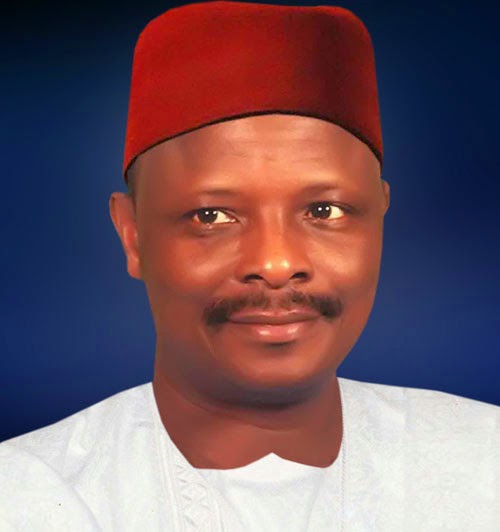
Atiku Abubakar is a former Vice President, an experienced and thoroughbred politician with a formidable national political machine oiled by his savvy for wheeling and dealing and his immense wealth. Governor Rabiu Kwankwaso comes to the table with youth on his side, and more importantly, a very impressive stint as governor of Kano, one of Nigeria’s complex and most volatile states. Kwankwaso has shown himself to be both an adept administrator and an adroit politician – a very useful combination in a clime in which governance and politics exist in an uneasy tension.

In an ideal world, the APC would blend Buhari’s popularity, Atiku’s political savvy and machine with Kwankwaso’s progressive energy and drive to create its perfect flag-bearer. It is precisely because it cannot do this that it must reconcile the weaknesses and strengths of these contenders and ensure that its primaries are not so fractious that they fatally damage whoever emerges as the winner.


At 72, this is clearly Buhari’s swan song in elective politics after three previous unsuccessful presidential bids. Elements within the APC leadership favour him because his haul of 12 million votes in the 2011 polls make him a bankable vote magnet particularly in the far north. But there are two problems here. Buhari, for all his popularity in the north, has found it difficult to become a national brand. The manual for defeating him was written in 2003 when President Olusegun Obasanjo’s campaign successfully tarred him as a religious extremist and ethnic bigot. It was slanderous nonsense but the charge has proven potent in our polarized times not least because of Buhari’s occasional flair for untimely verbal own goals and self-subverting soundbytes. It did not help matters that in 2003 and 2007, his party, the All Nigeria Peoples’ Party campaigned as an “Islamic” party in the North.

Secondly, Buhari has never actually won an open and fair presidential primary contest. In 2003 and 2007, he was virtually muscled in as a consensus candidate by ANPP apparatchiks which alienated influential party operatives on both occasions. In 2011, the Congress for Progressive Change which was practically set up as a vehicle for his presidential ambition floundered because it was manifestly a personality cult and lacked the organizational acumen as well as the fiscal and human resources to mount an effective national campaign.

Primary contests are not about popularity. Rather, they test a candidate’s ability to rally party delegates. Buhari disdains the sort of wheeling and dealing that characterizes a nomination process. He perceives himself as being above politics and is frequently condescending to politicians. Thus, he has never been able to win over the political operatives that can secure party tickets in an open contest and has instead typically relied on the anointment of party elders. The fact that his military regime jailed many Second Republic politicians has fuelled a residual elite suspicion of his agenda. The APC’s adoption of a modified direct system for its primaries will allow 300, 000 delegates to participate and this widening of the pool could enable Buhari be more competitive than he might ordinarily have been.


Atiku, on the other hand, is an adept veteran of primary contests since 1993 and is endowed with the sort of personal and political diplomacy that sways delegates. His accessibility is in contrast to Buhari’s aloofness. Kwankwaso also has keen political instincts in this terrain. Both Atiku and Kwankwaso would be far more comfortable in this arena than Buhari but neither of them possesses Buhari’s name recognition or that bankable fund of fanatical devotion that would be crucial in the general election.

It is quite the conundrum. Buhari may be a fairly competitive brand for national elections but lacks the transactional skills for primary contests. Atiku and Kwankwaso have what it takes to fare well in the primaries but do not have Buhari’s following which would be crucial for the national polls. Atiku lacks Buhari’s reputation for incorruptibility and Kwankwaso, despite his impressive work in Kano, must work hard to stamp himself in the national consciousness. In truth, none of these candidates is certain to defeat the incumbent president next year.  


Buhari’s partisans will argue that the party leadership ought to do all it can to ensure Buhari clinches the ticket since he can pull in the numbers. But Atiku and Kwankwaso could counter that the ability to sway delegates in the primaries is not to be scoffed at. It is, after all, a predictor of the ability to mobilize the ground troops for the general elections. They will also point at the rather limited geography of Buhari’s appeal. Having 12 million votes is of no consequence if they are sequestered almost entirely in one region. They will observe that Buhari, despite his adoring legions, has lost thrice to three different ruling party candidates in a decade, and quite rightly suggest that a persistent defect in his brand, whether perceptual or actual, makes him nationally unelectable.

Certain actors within the APC would prefer a “bloodless” non-acrimonious primary process in which Atiku and Kwankwaso step down for Buhari. This is unlikely and Kwankwaso has already reportedly rebuffed overtures to concede the ticket to Buhari. This is fair. The APC needs an open primary contest if it is to avoid self-destructive internecine recrimination afterwards and its leadership will have to avoid the temptation to stage a victory for a favoured contender. From all indications, the primaries will be keenly contested. What happens next will be interesting. 


  Images sourced from  (in order of appearance)
www.today.ng 
www.ynaija.com 
www.dailypost.ng
www.kanopillars.com   

Sunday, May 25, 2014

State of Denial


With each terrorist outrage, opposing partisans volley conspiracy theories back and forth, accusing either the federal government or the opposition of masterminding the attacks. Confronted by an unprecedented threat and unable to respond effectively, we have resorted to conspiracy theorizing. We seem to be in denial that a terrorist insurgency is upon us.
 
This denial stems from a typically Nigerian hubris. During the 1970s and the 1980s, Nigerians believed that their country was too sophisticated to produce an Idi Amin or Mobutu and were blind to that possibility right until General Sani Abacha seized power and plumbed hitherto uncharted depths of savagery. Similarly, we have long believed that terrorism and suicide bombings are exotic lunacies confined to foreign lands even though our social indices and derelict governance all pointed towards the eventual emergence of an organized insurrection as we have since witnessed in the Niger Delta and the Northeast. 

In fact, Nigeria was institutionally unprepared to deal with a terrorist insurgency. There is more than a hint of cognitive dissonance in our evaluation of the situation. Nigerians generally agree that the state is fundamentally inept, incapable of providing basic social services, crippled by endemic corruption, patronage politics and perverse affirmative action gestures. But they inexplicably expect the same state to readily “deal with” a highly adaptive, protean threat like the current insurgency. Officials admit that Nigeria’s borders are unguarded but express amazement at the proliferation of weapons. Nigerians are attributing to malice, several things that are sufficiently explained by incompetence.  

When ineptitude, mediocrity and graft attain epidemic proportions, their manifestations seem like a conspiracy to the unwary eye. But it is really years of institutional decay, inept governance and official kleptomania finally catching up with us. The results are brave but poorly-resourced, ill-motivated troops put in harm’s way, security lapses, failures of intelligence and martial resolve, and mutinous rumblings at the front lines. Insurgencies are fiendishly difficult to fight but corruption, incompetence and incapacity have also ambushed us. It is impossible to swiftly shift gears from institutionalized dysfunction to five-star efficiency in a national emergency. The real “conspiracy” is the pervasive belief that we could continue business as usual in the face of an unusual threat and not run aground. 


Nigeria’s law enforcement and security institutions are weak. The five year old insurgency has consumed over 4,000 lives and multibillion naira security budgets but there is no coherent national security doctrine that synergizes our security agencies. Both the national security adviser and the president have bemoaned the lack of interagency cooperation. Even the government’s response to Boko Haram’s demand for the release of its members in exchange for its release of the girls it abducted a month ago was met with contradictory responses from various functionaries, reflecting the administration’s strategic incoherence.  

Our institutional vulnerabilities are compounded by ineptitude. President Goodluck Jonathan’s defenders insist that he is the victim of a conspiracy aimed at aborting his second term ambitions. Even if such a scheme is afoot, his failure to act decisively against his “enemies” and protect Nigerians does him no credit. 

The nationalist Adegoke Adelabu once wrote, “At the supreme crisis in the history of every nation, there emerges spontaneously from the ranks of the common people, a leader and a saviour to pilot the ship of the state.” National crises often transfigure political leaders, endowing them with steely purpose. Jonathan has not been so endowed. Nigerians, regardless of their partisan, ethnic or religious allegiances, would be rallying round the president if he was providing strong leadership. As St. Paul wrote, “If the trumpet gives an uncertain sound, who shall prepare himself to battle?” We are at war but Jonathan’s leadership has been uncertain and uninspiring.  

Boko Haram’s indiscriminate blood thirst makes it an enemy against which a more competent politician would have galvanized the whole country. Instead, the administration has opted variously to play the victim, to milk terror acts for political advantage and to libel political opponents with unsubstantiated allegations of treason. It is true that the chain of negligence for many outrages extends beyond the presidency; a host of federal agents and state authorities are also culpable. However, the lack of penalties for official delinquency is telling; as is Jonathan’s preference for raising redundant committees instead of demanding results from his team and firing inept functionaries. 

This indulgence is worlds apart from the stone-cold realities of the front lines where the cost of failure is immediate and unforgiving. A mediocre officialdom has failed even to weave the successes and heroic sacrifices of the military and security services into an inspirational narrative and persisted with its victimhood. 

We are facing challenges that require bold leadership and strong institutions. We need fresh systemic thinking on how to police a population of 170 million people when our men and women under arms number less than 1 million. We need new strategies for urban planning and the protection of critical infrastructure and soft targets. We need to move away from analog security management protocols (roadblocks and checkpoints) and utilize human and electronic intelligence. The insurgency has displaced half a million people who have been abandoned but need to be placed in protected camps.

Boko Haram is eminently beatable but we must overcome our denial and face the reality of rebuilding our institutions, enhancing our crisis management capacities, redefining our leadership selection processes and entrenching meritocracy in public service. Without profound conceptual and practical changes in our approach to governance, our enemies will continue to find joy in fomenting anarchy.  


(Thisday, Sunday May 25, 2014)
(All images are sourced online)