Wednesday, October 6, 2010

Understanding Boko Haram: A Theology of Chaos

A kingdom can endure with unbelief, but it cannot endure with injustice.

                                                                            Uthman Dan Fodio 


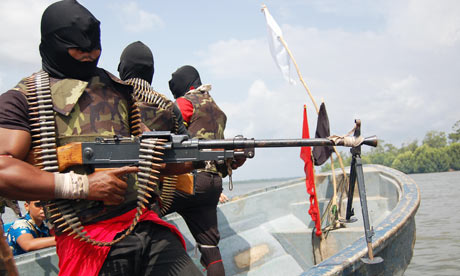
Three weeks ago, Boko Haram, the ultraviolent Islamic militant group rose like a phoenix from hell from the ashes of its defeat last year by the Nigerian military. In Maiduguri, Borno State, they carried out motorcycle-borne ride-by shootings targeted at police officers and other law enforcement agents. In Bauchi, they stormed a federal prison and set free hundreds of their members as well as other inmates and threatened reprisals against those they accused of persecuting their members. Obviously, the military did not defeat Boko Haram last year when a five-day long clash ended with the extrajudicial execution in police custody of Mohammed Yusuf, the group’s leader. Although scores of the militants were killed or rounded up, several also escaped, simply melting into surrounding environs. According to the State Security Service, Boko Haram has 540,000 members. A group with that numerical strength cannot be wiped out by the strategy of decapitation traditionally used by states to cripple dissident groups. Decapitation as a strategy is simply targeting dissident leaders for elimination as a means of exterminating their rebellion from the very top. The resurgence of Boko Haram makes clear that the military operation against it was only moderately successful.

The emergence of Boko Haram signifies the maturation of long festering extremist impulses that run deep in the social reality of Northern Nigeria. But the group itself is an effect and not a cause; it is a symptom of decades of failed government and elite delinquency finally ripening into social chaos. Think of Boko Haram and other extremist groups of its kind as bacterial cultures. We must understand the Petri dish in which they have been cultivated. In order to appreciate the peculiar resilience of such groups, we must grasp the socio-political and economic conditions of the north. Northern Nigeria is a seething mass of illiteracy, misery, poverty and beggary. While Nigeria generally scores very poorly on every index of human development, Northern Nigeria sinks below the abysmal national average to the extent that a child born in the northwest or in the northeast is likely to have a lower quality of life than a compatriot born in the southwest or southeast. 

The news headlines in recent months portray only a part of the north’s mosaic of human suffering. Since the beginning of the year, lead poisoning has steadily decimated children in villages in Zamfara State, where they have been forced by poverty to engage in illegal mining. Cholera, a water-borne plague eradicated by the early 20th century has reached epidemic proportions in the north where it has killed hundreds. The recent outbreak has been called the worst in twenty years and according to the Federal Ministry of Health now poses a threat to the rest of the country. Cholera is rife in the north because of the lack of potable water and flooding. In addition, the southward surge of the Sahara is claiming many natural water bodies forcing rural folk to resort increasingly to contaminated water sources.      

In 2006, Borno State Governor Ali Modu Sheriff told broadcasters that he was not bothered by criticisms of his administration in the print media because 95 percent of the people in the state cannot read and write. In any case, he added, less than 2 percent of Borno residents have access to newspapers. The governor’s press people later clarified that what he had meant to say was that radio and television were the dominant media in the state. To discerning ears impervious to spin-doctoring, it sounded as if Governor Sheriff had been glorying in the illiteracy level of his people and boasting of its utility as a political weapon. Mahmud Shinkafi, the current governor of Zamfara achieved infamy in 2002 when as Deputy Governor he pronounced a fatwa urging Muslims to kill Isioma Daniel, a Thisday reporter, for alleged blasphemy. Despite the acute humanitarian crisis of the north, its leading politicians have been preoccupied in recent months with how to clinch presidential power in 2011 and how to negotiate favourable niches in a post-2011 political reality.  Clearly the priorities of the so-called northern political elites are not in consonance with the realities of their people.

These facts are necessary to provide an insight into the prevailing political psychology in the north. Boko Haram is the consequence incarnate of misrule by delinquent political elites. It is a creature of state failure demonstrating the decline of our institutions in all its unvarnished ugliness. Despite the fact that the sect sent a widely publicized letter warning of its militant intentions, its attacks still surprised law enforcement agencies. The diminished intelligence capabilities of the government, the ease with which the militants struck at the federal prison and the group’s boldness in attacking federal agents since 2005 all indicate the waning strength of the Nigerian state. Elsewhere in the federation a range of embryonic insurgencies exist in the form of militant groups in the Niger Delta and kidnap gangs in the south east, and they intimate us of the fact that the Nigerian state no longer has the means to impose its will on this country; it no longer has a monopoly over the coercive instruments that underwrite the state’s rule and indemnify it against sedition or dissidence. Boko Haram is the terrifying face of this reality in northern Nigeria. It is the harbinger of incipient chaos.      

Boko Haram is an extremist group but it transcends the traditional extremist victimization of Christians in pursuit of grander anarchic ambitions. Its war is with the Nigerian state and western education which it perceives as a vector of the corrupting influence of modernity. Its ultimate objective is some version of an Islamic state, preferably of 7th century vintage. In this, it closely resembles Maitatsine, the violent extremist cult that inaugurated the bloody era of religious terrorism in the north in the early 1980s. But Boko Haram is itself only a part of the picture. The social conditions that permit its existence are rife across the country. Millions of unschooled and unskilled able-bodied young men reside in our cities and towns and provide a ready pool of malcontents for extremist recruitment. Even among the educated unemployed, the crisis of unemployment in Nigeria where 40 million youths are jobless makes them vulnerable to sectarian preachments. Into this breach, groups like Boko Haram enter offering a theological framework of social analysis: rampant poverty and existential meaninglessness emanate from the Nigerian state and its unislamic provenance; from the presence of western education and the intrusion of modernity into an Islamic society. Boko Haram imparts to its members a sense of purpose and mission as warriors for the cause of God ordained to cleanse the society of moral impurities and establish an alternate order.

In a failed or failing state, religion is particularly prone to perversion. The role of the state is to protect humanity from assault by the elemental forces of nature through the institution of law and order. Where the state is derelict, religion is often the likeliest agency people turn to for interpreting the vagaries of their existence. This is what has happened in Nigeria. The explosion of sectarian violence in northern Nigeria coincided with four developments in the eighties – the collapse of the Second Republic which signaled the failure of politics and a popular loss of faith in politicians; Babangida’s imposition of the Structural Adjustment Program (SAP) which eliminated state subsidies, and through untrammeled trade liberalization wiped out local enterprises (especially the major textile industries and tanneries of the north) thereby eliminating jobs; the Babangida regime’s unhelpful religious politicking as evinced by its surreptitious dealings with the Organization of Islamic Countries (OIC) which gave the impression that it was a pro-Muslim regime and inflamed sectarian suspicions; and the collapse of the agrarian communities of Nigeria’s northern neighbours, Niger and Chad due to massive plagues of drought and desertification, spewing huge numbers of refugees into northern Nigerian cities where they fell into the void of extremism. Niger and Chad are essentially failed states and represent bleak prophecies of what could eventually befall northern Nigeria.

Even now, as desertification and drought devastate vast swathes of the north, a convergence of ecological, economic and social adversities is occurring. When rural areas lose ancestral farmland to the onslaught of the Sahara desert, huge numbers of disinherited young men flood northern towns and cities in search of jobs. In some places they become commercial motorcycle riders known as Achaba who now number about three million in the Kano metropolis; otherwise they swell the ranks of the urban underclass and most wind up on the margins of society from where they become easy recruits for politicians looking to build private armies or for roaming bands of outlawed extremists or bandits. Note that in the southeast where gully erosion has devastated rural communities, young men dispossessed of any means of livelihood make for the urban areas where many sadly enlist in the underworld. It is permissible to argue a direct link between the ecological degradation of rural areas and the uptick in urban crime and terrorism that has gripped south eastern metropolises.

These instances tell us that the umbrella of the Nigerian state is in tatters and while a derelict political class continues its self-indulgence, dispossessed Nigerians are embarking on the path of self-help by any means at their disposal. Religion is one of those means. It is tempting to argue that this pattern of perverse religiousity is something unique to the north and attributable to its Islamic heritage. This is untrue. Consider the neo-Pentecostal cults in Akwa Ibom that engage in torture of suspected child witches. In these communities, pastors or exorcists are engaged by poverty-stricken parents to seek out the witches in their household. Children are tortured, found guilty of witchcraft and banished from home from which point onwards they fall prey either to early death or sexual slavery and maltreatment as victims of child-trafficking. In a failed or failing state, religion assumes the role of locating scapegoats to explain social conditions of misery. In the north, Boko Haram blames the presence of western education and the Nigerian state itself; other extremists blame it on the presence of Christians or infidels, just as in some other parts it is blamed on the presence of non-indigenes, infidels or strangers. In parts of Akwa Ibom, defenceless children are the scapegoats for material conditions of poverty.

The view that Islam is solely to blame for religious violence in the north is simplistic for another reason. The south has a very substantial Muslim population (particularly in the southwest and parts of Edo state) and records very little of the sort of sectarian bloodletting that periodically grips the north. The region’s acceptance of western education and, especially, Obafemi Awolowo’s single-minded insistence on free education freed many communities from the yoke of illiteracy, boosted the technical capacity of the western region and created a vibrant middle class. Economic security meant that religious affiliation could not be the primary social identity in the region. Lagos State, for instance, has only ever had one democratically elected Christian governor – Sir Michael Otedola, who served in the short-lived Third Republic. Yet, this has never been an issue in Lagos politics. Compare this with Kaduna State where Governor Patrick Yakowa is the first Christian to occupy that position, despite the considerable Christian demographic presence in the state. His ascension to that office this year was attended with uneasy novelty, tension and fears of sectarian violence from some Muslims who saw his rise as a loss of power.  

The difference is that religion is at the centre of northern life. Matters of faith are synonymous with political allegiances. The north, historically hobbled by its cultural resistance to western education, experienced the absence of technical capacity and a lack of readiness for the demands of a modern economy, for which it had to compensate by accommodating southerners and expatriates. According to B.J. Dudley in his seminal work, Instability and Political Order, deep-seated resentment of the educated, technically-savvy southerners who formed the urban merchant middle class of the north was the source of ethnic violence in the region between the 1940s and 1960s. He argued that these explosions of inter-tribal animosity were also (indeed, primarily) class conflicts pitting wealthy southerners against the northern urban underclass. This thesis remains valid. Storefronts in commercial districts are specifically targeted during bouts of rioting by the armies of vagrants and juvenile delinquents that roam northern cities and towns. This kind of “ethno-religious” violence stems from cultural hysteria – the angst of communities who are unprepared for a modern social economy, who have been raised to be deeply antagonistic of modernity and who consider themselves assailed by outsiders as a result.  Young males are socialized to see themselves as victims and then to react as aggressors. Their rage is inevitably directed at presumed alien influences in their communities, often people of other faiths and ethnicities. Supremacist ideologies rooted in inferiority complexes gain increasing audience.

Without the skills necessary to access opportunities in the current socio-economic equation, the people are left with nothing but their religion as their sole resource and are thus vulnerable to all the monstrous mutations of faith that are liable to manifest in a climate of ignorance, corruption and economic inequality. Such alienation feeds the burgeoning subculture of violence embodied by street gangs like the Yan Daba in Kano and Sara Suka in Bauchi. The political imperatives are clear. The north in educational and socio-economic terms is a disaster area comparable to the ecologically devastated Niger Delta. Both zones are theatres of human and environmental carnage wrought by rapacious elites. Northern politicians have singularly failed to invest in education and to fast track infrastructural development in the region. Indeed, over the years, northern elites have cultivated the impression that illiteracy and ignorance are part of northern identity; that part of what it means to be a northerner is to be illiterate, in order to facilitate their own positions as political protectors of their victimized people. Even the Koranic education system is dysfunctional and is mainly mass-producing millions of almajiris – the street children that are fixtures in virtually every northern town and city.

This is a travesty of the region’s history and heritage. Northern Nigeria has a long-lived tradition of learning and literacy. Uthman Dan Fodio’s jihad was not only aimed at purifying Islam but also at replacing the rule of materialistic potentates with that of scholars. A comparable analog is Plato’s idealized government by philosopher-kings. But Northern-dominated anti-intellectual military regimes from the mid-eighties onward reduced the region to a crypt of learning. Anti-intellectualism is now promoted as being synonymous with Islam – a strange proposition since the religion gave the world gifts of insight in the sciences, astronomy, medicine and mathematics especially algebra. We still use Arabic numerals as the mathematical medium for explaining the physical universe.  In the north, there persists a residual antagonism of the so-called Yan Boko – western-educated northerners “who have forgotten their roots.” This obdurate resistance to education and glorification of illiteracy remains along with elite kleptomania, the region’s greatest obstacle to progress and the leading vector of sectarian violence and poverty.


At the beginning of the 20th century, the British colonialists and the Fulani aristocracy conspired to block the spread of western education in the north. The British wanted to avoid what had transpired in southern Nigeria where the ready acceptance of education had created a generation of anti-colonial nationalist agitators. They also wanted to avoid the emergence of educated Islamists of the sort that were then challenging their rule in Egypt. The British understood that western education would upset the conservative feudal social order over which their allies, the emirs ruled and would ultimately endanger colonialism itself. The Fulani aristocracy objected to western education because they feared that its Christian missionary purveyors would gain inroads into their domains.

Herein lies the source of the historic schism between northern and southern Nigeria. It was not political in the beginning but educational, technical and thus socio-economic. The northern elites of the independence era led by Ahmadu Bello necessarily saw their roles as slowly opening their society to modernity while preserving it from domination by the southerners who were better prepared for the rigours of a modern economy. Today, it is fair to say that the general antipathy to western education in the north has been sustained by political elites who understand that psychological subservience is best perpetuated in a climate of ignorance and fear. By using the bogey of southern domination and manipulating religious and cultural symbols, northern politicians have been able to maintain their access to power. Decades ago, the leftist academic Bala Usman extensively critiqued what he accurately identified as the elite manipulation of religion for economic and political advantage.

Boko Haram and other extremist groups of its ilk have also emerged in the context of a yawning political vacuum in the north. Forty years ago, the poor of the north at least had champions like the great Mallam Aminu Kano and his Northern Elements Progressive Union (NEPU) and later the Peoples Redemption Party (PRP). Mallam Kano, a scion of the ruling class was an ardent advocate of the talakawa and made it his life’s cause to terminate the conservative power structures that he deemed responsible for their poverty. He championed education, women’s rights and the social emancipation of a people bent double under the yoke of feudal oppression. He used Islam as a liberating ideology against the preachments of those who used Islam as an ideology of subjection of the masses and women. In his excellent study, Ethnic Politics in Nigeria, Okwudiba Nnoli details how the British colonialists colluded with their local confederates in the 1950s to deny NEPU its electoral victory using thuggery, chicanery and intimidation.

In the years since the early eighties when Mallam Kano died, the fortunes of northern progressives have waned. There has been no other northern (or for that matter, Nigerian) politician of comparable iconic status and moral authority. The machinations of conservative opponents and military dictators ensured that the northern progressive movement was reduced to its entrails. No politician and certainly none of his prominent disciples have risen to claim Aminu Kano’s mantle. In the absence of a progressive opposition to the conservative ruling elite, a dangerous vacuum has grown in northern politics. The talakawa may have lost their political champions but this is not to say that they are completely voiceless. It is this vacuum created by the neutralization of progressive forces that extremist cults are now seeking to fill. It is their advocacy of the cause of the poor and their opposition to social injustice that lends these groups their appeal. Boko Haram and allied groups represent a potent if erroneous critique of the delinquent state and its dysfunctional leadership culture.

            Boko Haram’s actions cast some light on our institutional failings. Their assault on the federal prison in Bauchi may even be seen as an escalated protest against a travesty of justice. 70 percent of Nigeria’s prison population is awaiting trial. The justice system is over-burdened, beset by corruption, manpower shortages and other plagues. Keeping Nigerians in detention without trial indefinitely does not serve the cause of justice. From their point of view, Boko Haram simply liberated their brethren from illegal captivity by state agencies. If suspected terrorists cannot be charged to court and successfully convicted, then it is the fault of the state.
            
In a sense, the Boko Haram saga is also about chickens coming home to roost. For years, northern politicians paid lip-service to anti-Christian violence wrought by homicidal zealots. It was as though some secret diabolical transaction stipulated that Christian lives be used to placate the violent extremists to stop them from turning their attentions to their leaders. Emergent groups like Boko Haram, Kalo Kato among others are sectarian zealots like their forebears but have now arrogated to themselves the right to determine who or what is “Islamic.” To that extent, the double-edged sword of extremism is now aimed precipitously at the jugular of the northern ruling classes. It remains to be seen if northern politicians understand the catastrophic potentials of the Frankenstein monster that they have created; whether they can act to stamp out the homicidal pathologies festering along the margins of their society.
            
A few things can be done to arrest the slide into anarchy. The federal government should establish special tribunals mandated to deal expeditiously with cases of sectarian violence and terrorism. The capabilities of security agencies in terms of intelligence gathering and early warning systems should be enhanced. The operational conditions and capacities of the police mobile units, the army and other paramilitary agencies should be enhanced with respect to addressing urban terrorism and guerilla warfare. From all indications, our security forces are not yet attuned to the operational nuances of suburban counter-insurgency and conventional military approaches result in great collateral loss of life and property. Our northern borders with Chad, Niger and Cameroon are notoriously porous and have to be secured against the influx of weapons and would-be extremists and fanatics from these countries.
            
However, the greatest task lies in the domain of politics and public policy. The fact is that vast areas of the north are conducive to crime and insurgency. So too are the scores of decaying urban centres across Nigeria left desolate after the collapse of social services and public utilities in the late eighties and early nineties.  There needs to be serious commitment at the highest levels of government to address the entropic conditions incubating groups like Boko Haram. It might require some kind of federal intervention especially in the areas of education and healthcare and greater pressure on northern elites to develop the region. Without this, Nigeria could find itself battling with an insurgency in the north in addition to its manifold challenges. And unlike Niger Delta militants who are at least open to negotiating with the state, the absolutist extremist groups in the north want nothing except the very destruction of the state itself.  
            
Superior bullets, bombs and spies alone will not defeat extremism. Terrorism as a form of protest beckons to a generation of youths who see that they are destined to live and die in poverty and deprivation. Their present is bleak and their future is uncertain. Thus, they take refuge in a manufactured past, a mythical 7th century Islamic Utopia into which they seek to forcibly induct the rest of the society. For these alienated legions, life is a more frightening prospect than death so presumed martyrdom has an allure because it offers a post-mortem status that exceeds anything that Nigeria can currently offer them.  Such cults threaten national security because they virulently oppose the pluralism, tolerance and civic mutuality generated by the very existence of the Nigerian nation. Their ideologies are by nature exclusionary accommodating only one perspective. Our national ideal, even if observed mostly in the breach for much of our history, is inclusion. Furthermore civic solidarity is undermined when a growing number of Nigerians aspire to relocate to the 7th century while the rest strive to master the 21st century. It is worse when these mutually exclusive aspirations occur along geographical lines.

Ultimately, we must redefine the notion of Nigerian citizenship in such a way that it provides a framework of civic purpose and welfare for every citizen. Being a Nigerian must offer a measure of existential meaning for Nigerians otherwise disaffected millions will seek definition in narrow, exclusive and polarizing sectarian identity constructs. The only cure for extremism is an umbrella of psychological, social and economic security spread over the nation by a socially responsible state, one that sees its role as guaranteeing the common good. Constructing such a state is the most urgent task of leadership today.     

Friday, September 17, 2010

The Audacity of Hopelessness Part II


Nnamdi Azikiwe envisioned a Nigerian society run by “an aristocracy of intelligence” – a realm in which the smartest and most competent citizens would be at the helm of affairs. The nationalists of his generation would have been dismayed by a situation in which even the presidency is allocated or “zoned” to an individual on the basis of ethnicity or creed rather than through free and open democratic contest. In The Trouble with Nigeria, Chinua Achebe argued that the abolition of merit in our public life fosters social injustice and a cult of mediocrity. “The greatest sufferer,” he wrote, “is the nation itself which has to contain the legitimate grievance of the wronged citizen and accommodate the incompetence of a favoured citizen and, more important and of greater scope, endure a general decline of morale and subversion of efficiency caused by an erratic system of performance and reward.”

Politicians who make it a priority to renew our institutions and install merit at the centre of our national existence must come to the fore. Enthroning an aristocracy of intelligence must once more become a viable ideal. This is not borne out of idealism alone but of common sense. For the subtext that has yielded the audacity of hopelessness is a failing state. The fact is that the Nigerian state no longer has the capacity to project its agenda at will. The increasing prominence and boldness of various non-state actors convey this reality. Consider that the Nigerian police as at 2009 had a paltry 377,000 men policing a population in excess of 150 million. Even combining the ranks of military and paramilitary agencies cannot yield the numerical strength required to monitor a country as populous as ours. And the numerical strength of security agencies is by itself insufficient to address the range of asymmetrical threats that threaten the republic. This explains the federal government’s recurrent inability to swiftly address eruptions of sectarian strife. It is not, as frequently supposed, merely a failure of political will, but a matter of institutional incapacity.

We live in an age of privatized violence and deregulated terror. The state no longer enjoys a monopoly of coercive instruments. Armed robbers are frequently better armed than the police. The police force itself is too poorly paid, ill-equipped and ill-motivated to competently engage the new realities of crime. It is essentially a uniformed underclass pressed into service by desperate economic circumstances and armed by a delinquent political elite to preserve a tenuous social order. Theirs is ultimately a losing battle against the chariots of anomie.

Nigeria’s security and intelligence architecture is apparently still conditioned by the imperatives and the perceptual mainframes of the military era in which national security was conflated with the physical security and political paramountcy of the ruling regime. In the lexicon of martial authoritarianism, ruling regimes, like medieval European potentates, were synonymous with the state. This is why the political primacy of the Head of State is a prime security objective interpreted in the same terms as the security of the country itself. During military rule, this doctrine spawned the terrible excesses of the security establishment. Today they generate serious failures of intelligence and breaches of national security. The philosophy may have been alright for detecting coup plots, engaging mutineers and ensnaring dissidents. But it falls far short of addressing threats against the state that are indirect and subtle; it fails to detect the machinations of asymmetrical forces that are less interested in the capture of the state than in its subversion through stealth and artifice. Military era security protocols are useless when deployed against forces that have no interest in plotting coups to seize power, for example, insurgents and religious extremists.

The degraded capabilities of the state are the result of forty years of the denial of merit in our public institutions. The smartest and most competent Nigerians do not see the public sector as a career option, preferring instead the greener pastures of the private sector or foreign El Dorados. And as the public sector has come to be seen as a haven of state-sponsored mediocrity, the government’s inability to meet its basic obligations such as providing social services and security has diminished. As things stand, only the presence of Nigerians who still swear by the old verities of honesty and hard work is restraining the floodtide of moral anarchy from completely submerging our society. These are the salt-of-the-earth Nigerians who bear the burdens of their citizenship with nobility and dignity. In the teeth of incredible odds and the vexatious provocations of delinquent politicians, they have refused to make their poverty an excuse for crime. They represent the very best aspects of the Nigerian spirit.  But this remnant is itself endangered because neo-Machiavellian radical pragmatism has assumed the force of common sense in our society. Until merit is enthroned and moral certitude restored to the public square, more and more Nigerians will succumb to the audacity of hopelessness.       


Opponents of meritocracy tend to be supporters of policies like the constitutional Federal Character principle and the quota system. Their original intent was to facilitate equal access to social and economic opportunities for Nigeria’s diverse ethnic groups, especially those considered to belong to “disadvantaged areas.” In practice, these remedial mechanisms perpetuate social injustice, subvert meritocracy and have entrenched mediocrity in the public square and especially among the very people it was designed to help. The quota system and the Federal Character principle have failed because they have been used as channels for cronyism and nepotism instead of as instruments of democratizing opportunity. However, the failure of these policies as currently conceived does not negate the thinking that inspired them in the first place. The educational disadvantage of Northern Nigeria in relation to the South can be remedied by better governance and increased investment in education by both states and the federal government. Affirmative action programs are needed but should be designed to ensure that while democratizing opportunities for the disadvantaged, merit is not discounted. A multiethnic meritocracy is very possible.

There also needs to be a broader and deeper political commitment to social security and welfarism, both of which are enshrined in our constitution as “Fundamental Objectives and Directive Principles of State Policy” which proclaim among other things that the state shall “control the national economy in such manner as to secure the maximum welfare, freedom and happiness of every citizen on the basis of social justice and equality of status and opportunity.” This provision envisages a state that is socially aware and responsible, underwriting the education, employment and healthcare of her citizens, thus creating a necessary buffer between joblessness (and other disadvantages) and hopelessness. The salient paradox is that only institutions manned by the most competent hands can capably deliver these solutions. In other words, the necessity of installing meritocracy in governance is inescapable.   

There are those who will deride these proposals as idealistic. The proper answer to their position should be “so what?” What is wrong with being idealistic? In our present circumstances, the only alternative to idealism is the hopelessness and the nihilism that place us all at the risk of anomic violence. Idealism is not utopianism. It means aspiring to reach the highest levels of social and public virtue. It does not matter if we fall short. The point is that we make incremental advances on our journey towards a progressive and a sustainable nationhood.There is a widespread cynicism about Nigeria’s prospects among its comfortable and affluent middle and upper classes. This sentiment corresponds with the hopelessness of the underclass in every respect except that it is a self-indulgent escape by the more privileged from the responsibility of renewing Nigeria. Both the cynicism of the comfortable and the hopelessness of the afflicted are self-negating and nihilistic, offering no real solutions to the crisis. It requires no intelligence to state the obvious about the Nigerian condition. Pessimism is often the disguised mental laziness of the economically secure who have refused to think their way out of the morass. It takes real effort to find solutions. That is the work before all of us, not just politicians. 

Idealism requires fresh and bold acts of social imagination. Imagining a new Nigeria is a task for all of us – a civic responsibility. It is a call incumbent upon us as intellectuals to postulate a rational optimism about the nation’s future; as creative artistes to craft dreams of renascence in poetry, prose, song and ennobling myths because the soul of a society is forged in the province of its imagination; as politicians who must design and practice a new politics of hope and justice; as entrepreneurs who have to create wealth and value through marketable solutions; as public servants who bring a new zeal and conscientiousness to their stations and redefine the very meaning of public service; as social activists leading non-governmental agencies as angels of mercy into zones where the state and the market cannot operate because our capacity for compassion is what makes society humane. These contrarian engagements with the nation are essentially acts of faith. In short, nation-building is an act of faith.

It takes faith to transcend the Hobbesian ghettoes of absolutist self-interest and declare our collective possibilities and establish a common future. Idealism requires all of us in our various domains to live as exemplars of that faith; to incarnate the new Nigeria. This is how nations are made; they do not build themselves. A nation, after all, is more than mere geography. It is an idea. It is citizens, who through acts of faith in the name of their imagined future that breathe life into that idea and give it a tangible reality. And the nation thus quickened gives meaning, hope and purpose to its citizenry. In this way, citizen and state enable each other in a virtuous cycle of mutual affirmation. In our age, the one response we can muster to the audacity of hopelessness with any certainty of success is the audacity of faith.  

Sunday, August 22, 2010

The Audacity of Hopelessness Part I


The capacity to produce social chaos is the last resort of desperate people.

Cornel West

           The advanced nations of the world have built their institutions upon a simple moral equation that can be stated thus: ‘Talent plus hard work equals success.’ It means that so long as the citizen understands his talents and gifts and is prepared to maximize his potential through endeavour at school and work, he will ultimately be rewarded with success. This principle is built into the reward systems, structures and institutions of these nations. In practical terms, it ensures that the cream always rises to the top and the most gifted and competent hands are assigned the reins of leadership in every sector of the polity. With the best and the brightest at the helm, nations advance continuously, breaking new grounds in human progress.
            Even when talented individuals are hamstrung by forces beyond their control, such as the economic status of their parents, welfare systems are in place to provide a financial cushion for such disadvantaged but promising persons. Unemployment benefits and allied forms of social security are meant to provide a springboard for the disadvantaged to compete for honours. They ensure that no citizen is ever denied economic or social opportunities on the grounds of ancestral underachievement. No generation should suffer for the sins or limitations of its forbears. Individuals will succeed or fail by their own hands. In essence, the principle of meritocracy is the moral engine that keeps the most advanced societies and economies of the world racing ahead. This is, of course, an ideal. Even among the world’s richest nations, inequalities of access to opportunity exist. What is key is that the fulfillment of this ideal remains on the front burner of politics and public life.
            The notion that talented citizens who apply themselves will be rewarded with financial security, public esteem and high repute is intimately bound up with the idea of justice. Justice in this context means just reward. The operative assumption at the heart of these nations is that their talented and dexterous citizens will be justly rewarded. Good things will come to the most deserving. Injustice, therefore, describes a situation in which this moral equation is not active.
            The effect of this equation is to give hope, purpose and meaning to the citizenry. It tells them that a moral order exists; one in which the most productive members of society are adequately rewarded. It proposes that success is neither an accident nor the whimsical gift of capricious gods, but the logical consequence of talent and endeavour. Citizens come to believe that they are not at the mercy of fate or caprice but truly captains of their own destiny. The autonomy of conscience and the will to create unleashed by this understanding is the wellspring of progress and innovation. What results from all this is a virtuous cycle in which achievers become exemplars of infinite possibilities inspiring more people to pursue excellence thereby creating yet more exemplars who spawn yet more achievers. For example, Barack Obama’s historic ascension to the American presidency has surely raised the bar of aspiration especially among African-American youths who can now aim to be more than basketball stars and rap artistes. Achievement becomes a virtue; excellence, a habit and progress, the default mode of a society so engineered.
            If there is any formulation that amply summarizes the secret of the successes enjoyed by the world’s leading nations, it is this simple principle that talent coupled with hard work results in success. Conversely, if there is any singular statement that summarizes the Nigerian crisis, it is that this moral equation is no longer at the heart of our society. For most Nigerians, especially the generation born after 1975, there is a crystal clear moment in the memory when it dawned on us that succeeding in Nigeria had to do with much more than talent and endeavour. It may have been when National Common Entrance Examination results were announced and we were told that despite scores exceeding the stated cutoff mark, we would not be admitted into the secondary schools of our choice because Nigerians from different states are subjected to different test standards. It may have been when, in pursuit of either higher education opportunities or jobs, we were quietly told that we were from the wrong geopolitical zone, or the wrong state, or the wrong local government area or possibly even the wrong family. In that moment, the notion that talent and hard work would never suffice struck us with revelatory clarity. We realized then that there were other unknown variables hidden in the Nigerian equation for success. From that point on, we committed ourselves less to achieving the pious ideals of honing our talents and working hard and more to the mastery of these unknown variables, whatever they might be.
            The suggestion that talent and hard work have little to do with success in Nigeria may be debated by some. Certainly, there are several prominent Nigerians who are celebrated for their talents and have risen to the top of their fields through the application of their formidable gifts and tons of hard work. However, what is not debatable is that millions of young Nigerians have come to believe that talent and hard work are not the primary prerequisites for achievement in Nigeria. Indeed, many discount them entirely as factors. We encounter this belief frequently when we are told that merit matters less than “connections” in clinching a job or a contract or when we hear the axiom that getting an appointment is about who you know rather than what you know. An NOI-Gallup poll conducted in 2007 found that “the more educated Nigerians are, the more they believe in the power of ‘connections’ and the less they believe hard work is the critical ingredient for progress in our society. The consequences of these beliefs are catastrophic. Why bother discovering one’s talents if they do not count for anything in the scheme of things? Why bother with hard work if it is all futile?
            These are the questions haunting a generation of young citizens increasingly surrendering to existential nihilism. For without the moral idea that talent and hard work will be justly rewarded, there is only the psychic inertia of hopelessness and despair. The notion of just reward fortifies the conscience against lawlessness. When it is eroded, disaster is afoot. Why delay gratification when society’s ethos strongly suggest that there is no tomorrow to live for? Why not eat, drink and debauch ourselves today because we may well die tomorrow? Why work hard to pass examinations when having brains is scarcely respected in our anti-intellectual society? Indeed, why work hard at anything at all? This is the crisis at the root of the plagues of delinquency now rife in our society. The epidemic upsurge of fraud, armed robbery and the newly prevalent species of violent crimes such as ransom kidnapping and suburban terrorism typically carried out by youths between the ages of 17 and 35 are symptoms of deeper sense of hopelessness.
           
          Fifteen years ago, it was difficult to imagine that Nigerian youths would ever engage the military and paramilitary forces of the state in violent combat. A clear threshold existed in the Nigerian consciousness that precluded the possibility of violently confronting the servants of the state. But over the past decade as pocket insurgents, vigilantes, sundry militias and gangs have multiplied atop the rubble of widespread urban decay, it has become clear that this threshold has been breached if not erased completely. Fifteen years ago, a strategic assessment of threats confronting the republic would have highlighted a military coup by adventurous soldiers. Today, the threat to the republic comes not from mutinous elements in the state apparatus but from non-state actors of which there is a fearsome plenitude on our shores. The spectacle of young Nigerians violently taking on the state whether as militants or extremist fanatics is a manifestation of what I call the audacity of hopelessness.
            Members of Boko Haram, the violent Islamic extremist sect tore up their school certificates not only because their leader taught that western education is a sin but also because there was scant evidence that their certificates would earn them access to a more qualitative life. In the south east, male school enrolment figures have been in decline since the mid 1990s in consonance with the spreading belief that illiteracy is of no consequence if you have money. At first, males in the region took to trading in their quest for wealth and then they turned to a variety of darker pursuits. At its best, education directs individuals to their place of optimal function in the social organism. It facilitates self-knowledge and purposeful citizenship. But in our anti-intellectual clime, the value of knowledge and learning is questionable and wealth sits atop the highest pedestal of our priorities. The consequence is that too many of our young people are locked in an existential funk and a vocational limbo. All this stems from our perverse reward system.        
When Sigmund Freud was asked the secret of happiness, he said simply, “work and love.” The economic empowerment and dignity which comes from being productive citizens and the consequent ability to raise families is what gives people a stake in their society. Once people are so invested in their communities with the means to create and procreate, their appetite for delinquency and deviancy correspondingly diminishes. Their work gives them something to live by; their family gives them something to live for. In this way, work and love impose a regulatory discipline upon citizens. Vast millions of unemployed young Nigerians have no such stake in the country’s future. Their economic exclusion makes them predators on society rather than shareholders in its progress.
As Obafemi Awolowo said after the civil war, “As long as there are serious doubts in the minds of Nigerian citizens as to the availability and permanence of economic prosperity and social justice, so long they will be disposed to civil war, or to its next of kin – civil strife or communal rioting.” It is clear that we have bred a generation of malcontents now dispensable as cannon fodder in episodes of political violence, sectarian strife and internecine conflicts. The British scholar Anthony Kirk-Greene once wrote, “Fear has been constant in every tension and confrontation in political Nigeria. Not the physical fear of violence, not the spiritual fear of retribution, but the psychological fear of discrimination, of domination. It is the fear of not getting one’s fair share, one’s desserts.” In other words, it is the fear that playing by the rules is futile and insufficient to guarantee success and security. This fear is undermining our democracy.   
The moral context of Nigerian life is also significant. In practical terms, Nigeria is a place where good things happen to bad people in a blatant transgression of natural justice. Persons of disrepute are rewarded for their lack of scruples with national honours. Convicts and felons have been known to enjoy access to the highest levels of government. In short, criminality is all too often rewarded. Whereas advanced societies have mapped meritocratic routes to wealth and power, the paths to similar objectives in Nigeria are fraught with unpredictability. There is no guarantee that a lifetime of honest effort will be justly rewarded. This explains why allegiance to godfathers, secret cults and rogue politicians is increasingly seen as the surest route to economic, social and political security. It also explains the preponderance of black markets, renegade civil servants and similar institutional mutations which subvert our democracy. For where due process and rule of law are debased, only social Darwinism can prevail. 
            Let us then consider the dilemma of the generation now coming of age. They make up the ranks of a forty million-strong army of jobless Nigerians. Their experience of Nigeria is of retirees denied their benefits after a lifetime of service to their country. It is of countless brilliant soldiers wastefully consumed in attritional cycles of coups, counter-coups and rumours of coups. Their material reality is one in which unacceptable levels of want and beggary exist in the same time and space with pornographic opulence. Let there be no mistake, popular discontent in this country does not stem simply from poverty - poverty is present in every country; it is that poverty in Nigeria occurs within the context of stark inequality, public theft, status consciousness and the idealization of riches. Under such circumstances, poverty is interpreted as the consequence of being stupidly honest, of being naïve and of refusing to be as radically pragmatic as success in our culture demands. 
            The moral conclusions yielded from this experience are frightening. The emergent generation grew up in a clime in which the strong trample upon the weak often with assistance of state power. Success therefore does not require goodness but strength as a cardinal virtue. They have been socialized in a land in which wealth and power are idolized. There is therefore no virtue in being honest. The only virtues are wealth and power and these are to be acquired by absolutely any means necessary. It does not require a social scientist of exceptional vision to discern in this worldview the blueprint for an animal kingdom. The audacity of hopelessness thus emanates from the spiritual suffering of people who see their talent, their hard work and their lives wasted in the gyre of a meaningless existence. It comes from the subjugation of good minds by stupid ones; and the strangulation of nobility and courage by mediocrity, mendacity and perfidy.  

Friday, August 20, 2010

Nigerians and the Beautiful Game


Some people think that football is a matter of life and death. I assure you, it’s much more serious than that.
Bill Shankly


              For a while now, Nigerians have been given very little to cheer about by their national football teams, especially the Super Eagles. A few triumphs at the junior, youth and women's competitions have not been consummated by real success at the highest level of the game by the Super Eagles. The last three world cups and African Nations’ Cup tournaments since 2004 have been disastrous by Nigerian standards. To grasp why this matters at all, we need to understand football’s deeper meaning in the national psyche. Nigerians tend to hit the summit of their collective consciousness during football matches involving their teams. This is a genuine social phenomenon. Nigerians are never more united that when the Super Eagles are playing. For a country that supposedly lacks national character, Nigerians are remarkably enthusiastic about their football teams. This is understandable. Some analysts say that of all sports, none resembles warfare more than football, a game in which eleven warriors on each side risk their limbs, to win personal esteem and national glory. It is a continuation of war by sporting means.
Nigeria is a football-crazy nation where passion for the game runs very high. A Nigerian goal is a moment of national euphoria; a contagion of ecstatic madness that instantly spreads from one end of the country to the other. According to Onome Osifo-Whiskey, Nigerian nationalism explodes at such moments because through football, we are making our last pitch for recognition in the world as a special power. During tournaments, Nigerians mysteriously forget ethnic allegiances, religious affiliations and all other emblems of a fragmented national existence and bond together in support of their team. There is much more to what is at work here than just football.
            During the 1989 World Youth Championship in Saudi Arabia, a talented under-21 team got to the semi-finals where they faced the powerful Soviet Union. The Flying Eagles shockingly conceded four goals in the first half of the game and by halftime, despondent Nigerians had given up on the team. But in the second half, a revival of epic proportions ensued. Chris Ohenhen scored two magnificent free kicks in quick succession to halve the soviet lead.  The late Ernest Okonkwo, Nigeria’s greatest soccer commentator, then at the height of his powers, would cut in intermittently during the match urging Nigerians to pray, while quoting verses from scripture. A defender aptly named Samuel Elijah scored the third goal, and then Nduka Ugbade ran on to a pass, rode some desperate tackles to score the equalizing goal.
The soviets were dazed and Nigeria went on to triumph after extra time on penalty kicks. The entire nation was delirious with joy. Afterwards it did not matter that the Flying Eagles subsequently lost to Portugal in the final. For Nigerians, the players were already champions.  The nation crossed a psychological threshold and pushed the barriers of possibility further than we could previously imagine. The Damman Miracle, as the Nigerian media dubbed the game, had etched a belief indelibly upon our national psyche; it is the belief that somehow with God’s help Nigerians will always come back from any setback no matter the odds stacked against them and that no scoreline no matter how wide spells certain defeat until the final whistle.
            During the 1996 Atlanta Olympics, Nigeria paraded a hugely talented squad that had been christened the Dream Team. The side advanced all the way to the semi-finals where they faced the mighty Brazil. Brazil, for most Nigerians and fans the world over, epitomizes the summit of footballing excellence; they model the way the game should be played. In the first half, the Brazilians led the dream team 3-1 and looked likely to score more goals. Many Nigerians went to bed in despair believing their team was beaten. Because of the time zone difference, Nigerians were viewing the match in the early hours of a working day. In the second half, the dream team upped its game and Victor Ikpeba pulled one goal back. Team captain Nwankwo Kanu scored an equalizing goal and then in extra-time scored a golden goal which ended the game. The Brazilians were heart-broken. Wild jubilation broke out on Nigerian streets in the early hours of the morning. And when the Dream Team went on to defeat Argentina in a pulsating finale, the entire nation was enraptured. Nigeria erupted in an unprecedented outburst of breathtaking nationalism. By beating two of the strongest footballing nations on earth, Nigeria’s heroic athletes had redefined possibility.
Both the Damman Miracle and the Olympic triumph speak to something deeper than a nation’s passion for football. When we see Nigerians put aside all differences to root for their team, we are witnessing the eruption of the national spirit. The Damman Miracle and the Atlanta 96 victory in a sense are both part of the nation’s folklore, part of a collective experience, a self-affirmative mythos which disclose our strengths to us as a people. Those memorable matches are a mirror of self knowledge for us. They portray the values which we subconsciously believe to be part of our heritage and our cultural DNA - heroism (On his way to scoring the fourth goal in Damman, Nduka Ugbade sustained an injury that dogged him for the rest of his career), courage, resilience (Nigeria will always come back from the dead), flair, skill, talent, faith (God is always on our side) and hope (for which Nigerians are accused of being incurably and unrealistically optimistic). To the Nigerian mind, the Eagles in full flight embody these values and the vast potential of Nigeria.
Military regimes understood the psychological and political capital that could be extracted from these sporting victories. During the Saudi ’89 Under-20 World Cup, the Babangida regime declared a public holiday to enable Nigerians watch the final match. As it turned out, the Eagles lost. It did not matter. While receiving the team back from Saudi Arabia, Babangida remarked that their “courage and fighting spirit” were the gains of his regime’s “search for a new consciousness among Nigerians.” In a similar vein, the Abacha junta declared a two-day public holiday to celebrate the two Olympic gold medals won by the Eagles and the sprinter Chioma Ajunwa. 
The frenetic intensity of these celebrations only papered over the blights on the national psyche. The celebrations could not erase the widespread angst with country’s general underperformance. Even as Babangida was serenading the Eagles, Nigeria was sinking deeper into recession. The very next month, the country was rocked by violent demonstrations against SAP. The regime responded by shutting down universities nationwide for several months. Successes in international football were a relief from depressing social, economic and political conditions. As Osifo-Whiskey observed in 1996, the Olympic victory could not obviate the fact that the country could “not yet make a single Adidas Boot, grass a single pitch, manufacture things as common as footballs, let alone dream of having a Nigerian-made scoreboard.” The staged jubilations could also not mask the fact that most of the athletes were living abroad because they saw no future for themselves in Nigeria. Or the fact that the country’s best and brightest were scattered across many foreign lands burdened by the weight of hopelessness and the dreariness of life in exile. In short, the sporting triumphs only underscored how far we had fallen as a nation.      


What the celebration of our sporting exploits reveals is that Nigerians desperately want heroes and heroines – totems and talismans that symbolize the potentialities for excellence and achievement presently lying dormant in the Nigerian spirit. In our successful teams, we perceive intimations of what the nation is truly capable of achieving. We see young Nigerians drawn from across the country on the basis of merit and capability not via dubious quotas or through ridiculous attempts to promote “federal character”. We see our youth give themselves to preparation, hard work, commitment and discipline. Their successes prove the wisdom of entrusting national tasks to the most competent hands. Chinua Achebe once wrote that Nigerian under-performance stems from a distressing tendency to field its third and fourth eleven with the resultant serial failure to make it into the world league. Applying the same metaphor, Dele Giwa argued in a 1986 column that Nigeria constantly fields its last eleven. Their rebukes address the fact that our most serious tasks are constantly entrusted to the most unfit, the most unprepared and the most undeserving.
Our society is looking for champions. The challenge is how to extend this same enthusiasm and passion for football to the larger social terrain. How can we get Nigerians to be as passionate about their nation as they are about their football teams? The super eagles are symbols which affirm the nation’s potential. Their exploits even affirm us individually as being capable of success and achievement. This is the kernel of that mysterious ‘something’ that gratifies Nigerians about their football teams’ victories and even the exploits of Nigerian players in foreign leagues. Old fashioned national pride which Nigerians are often accused of lacking manifests itself in this apparent craze for football. We can fan it by cultivating a cult of heroic example.
All nations need their symbols and totems. They might be personalities, institutions, images and even events but what they have in common is that they are charged with a profound meaning for the people of that nation. They are a means of psychological and spiritual capitalization; generating a mental impulse that propels national advancement. For the U.S. in the sixties, John F. Kennedy astutely identified putting a man on the moon as a totem and a symbol of American scientific and technological superiority. For South Africa, it was the way in which Mandela shepherded the nation from an apartheid enclave to a multi-racial haven skipping the interlude of a bloody racial civil war which so many observers had assumed was indispensable.    
One of the major tasks of political leadership is to provide the citizenry with symbols and totems with which they can identify their lofty aspirations for advancement. It is not enough to say that Nigeria is a great nation or that she has a manifest destiny; the people must have symbols and talismans: material embodiments of that greatness, tangible achievements which will serve as the first fruits of national self-realization. For us, that means providing and becoming those symbols in the economy, politics, education and socio-culture of the people. We cannot escape the Gandhian imperative: “We must become the change we want to see.”  

Monday, July 26, 2010

On Good and Evil in a Failing State


         Edmund Burke, the 19th century Scottish statesman famously said, “All that is necessary for the triumph of evil is that good men do nothing.” In applying this axiom to contemporary Nigeria, it is permissible to argue that the problem of our society is not that evil people outnumber the good. Various critics and analysts of the Nigerian condition have situated the national crisis within a broader collapse of values and an unhinging of public decency that ripened during the long dark years of military rule. Politics as we know it on our shores is a jarring study in the banality of evil. The news headlines strongly suggest that the ethical challenges of a post-colonial society still trying to find its soul have mutated into pure atavistic amorality in every dimension. The current generation of Nigerians raised and socialized under military rule has no terms of reference for moral conduct in public life or even the very idea of a public life. Incubated in the consumerist ethos of a materialistic age, it is a generation that does not believe in anything except self-interest, knows the price of everything and the value of nothing. Its creed is materialism but of the nihilistic and narcissistic kind.

          Even so, the problem is not that evil people outnumber good people but that good people do nothing. It is the Burkean conundrum. Nigerians are generally decent, compassionate and morally aware. They want the same things – the basic social amenities and the guarantees of security that make for a healthy, happy and wholesome life. They want to grow old and see their children and their children’s children progress and break new grounds in mutual prosperity. No ethnicity or creed has a monopoly over these aspirations; they are common, universal and indubitably human. However, the moral majority is also a silent and a passive majority lacking faith in the power of their goodness to prevail over evil. In fact, in our popular theology and popular culture, the power of evil is celebrated. Our home videos depict Nigerian life as a precarious existence threatened by an array of physical and metaphysical perils. The faithful are taught to pray against the machinations of the Devil and a host of supernatural forces ranged against them. Parents are more likely to terrorize their children into obedience with threats of Ojuju Calabar (a local masquerade or bogeyman figure) than to teach them voluntary ethical behaviour.

Why we have more faith in the reality of evil than in the power of good is a subject for anthropologists and sociologists to investigate. It may have to do with the African mind and how it traditionally interpreted the unpredictable vagaries of nature as forces to be feared and worshipped, not to mention the cultural penchant for seeking metaphysical causes to explain natural phenomena. We can venture further postulates. Apart from virtually nil infrastructural development, zero growth and a post-conflict type economy, military rule left other less visible but even more insidious legacies. These bequests are buried in our collective psyche and subconscious. In the course of the 1980s and the 1990s, we were socialized to believe in the power of the strongman; the man with the most guns and the most money and his divine right to lead.

Today, ten years into our at least nominal democracy, this belief continues to negate the emergence of authentic democratic institutions and habits. It is the reason why like military coups, elections in Nigeria feature all the elements of state capture, the hijack of the state and its arsenal of coercive instruments by political gangs and their eventual privatization of governance upon their ascent to power. It explains the gangsterization of politics and public service and the complementary adoption of oligarchic capitalism that makes membership of some cult, mafia or cartel, the presumptive pathway to political relevance and economic prosperity.

In many ways, Nigeria is like a frontier society, a 21st century version of the American Wild West characterized by primitive predatory capitalism and a surfeit of banditry and lawlessness. The culture of impunity and incivility that denominates our politics and public life is evidence of this. The Book of Ecclesiastes speaks of an epoch streaked by “the tears of the oppressed” who “have no comforter” in a land where “power is on the side of the oppressor.” These are our circumstances. A predatory ruling class simply steals, kills and destroys in order to secure power and economic resources. The Nigerian condition is not an accidental misfortune. It is not the unhappy consequence of poor planning and stupid policies although we have had plenty of that. It is not merely a result of the fact that increasing numbers of life-long felons are retiring into politics. Official corruption in Nigeria is not simply a problem of dishonest individual leaders and top officials; it is a system. The configuration of power and governance makes it essentially anti-development. Those who control the state thrive by subverting development. It is more rewarding for them that the state and the economy are dysfunctional than operating smoothly. It is systemic evil. What we have is not the rule of law but the rule of the outlaw, a moral climate designed to engender the ascension of antiheroes.

Our situation evokes a theodicy. Where is God? Where is the power of good in a realm in which evil is so mercilessly predominant? Where is hope when godless men prosper? To explain our adverse circumstances, a theology of fatalism and a bizarre eschatology that situates Nigeria’s redemption at some far-off future time has developed and seized the Nigerian imagination. The faithful are told that God will swoop down in due time, work miracles of apocalyptic proportions and set the nation free from its demonic captors. They are enjoined to pray unceasingly for the dawning of that judgment day. Oddly enough, even public policy is crafted in eschatological rhetoric. Consider that in 1979, General Olusegun Obasanjo predicted that Nigeria would be a superpower by the year 2000. During the 1980s, General Ibrahim Babangida promised millennial prosperity with housing, health, education and welfare for all Nigerians by the year 2000. General Sani Abacha shifted the millennial goalposts by a decade with his Vision 2010 economic program. President Obasanjo pushed the threshold further forward with his Vision 2020 agenda promising to make Nigeria one of the world’s twenty largest economies by the year 2020. Along the way, the Millennium Development Goals, a U.N. program to halve the incidence of poverty, illiteracy, disease, maternal and child mortality by 2015 has entered our canon of millennial visions. These prophecies were all the more remarkable because from 1979 to 1999, Nigeria recorded virtually no growth.

Long-term planning is all very well but that is not in the main what these programs were about. By deferring progress, these regimes, aided by their theological coefficients, postponed and continue to postpone the necessity of fighting in the now for justice and equity. By adopting a futuristic vision of national progress, the work left undone by several generations is laid up for our progeny who must bear the burden of their forebears’ knavery and indolence. Above all, the civic will to change is sapped as Nigerians are enjoined to pray for their leaders even as those same leaders perpetuate the plunder of our patrimony. The establishment prophets assure us that a millennial day of divine rescue is coming thereby desensitizing us to the urgencies of the now. Our duty, they say, is to survive, to cling on by any means necessary, until that day. If we cannot beat them, then we must join them. In the meantime, we are to accept that evil must prevail for now until the Lord in his infinite mercy moves to save us. And so the masses of otherwise decent and morally-sensitive Nigerians participate in the destruction of their country and become unwitting accomplices of the evil forces which they so readily revile. Just by the simple fact of their surrender to things as they are.

This nation has been literally brought to its knees in what may seem to be a posture of prayer and supplication. In fact, this posture is an apt metaphor of our genuflection at the altars of the oppressors. It is a statement of our surrender to the whims and caprices of feckless tin gods. This position of prayer is actually a portrait of our faithlessness and our civic and moral inertia. Authentic faith moves through prayer to politics; politics meaning a broad engagement in public life that conceives of a responsibility to the wider society at large whatever our individual callings might be. Faith must transcend personal survivalist concerns and energize social and political action. Good and evil are but cosmic abstractions. It is with our moral and civic choices that we incarnate either good or evil in the public square and in the market place. With our acts of omission or commission, we can become as angels establishing beauty, symmetry and order or demons perpetuating death, decay and dysfunction.

Throughout history, societies have been transformed by the twin moral impulses of righteousness and justice. These instincts emanate from a sense that good is inherently superior to evil and therefore, that evil can be defeated by good. The notion that good trumps evil is innately human. It has driven civilization throughout the ages. It is why we generally love fairytales and movies with happy endings. The great moral traditions of the world offer a hope in the eventual redemption of humanity, whether in the form of Nirvana, Utopia, New Jerusalem, Elyseum, Valhalla, Zion, Al Jannah, or allied idealized visions of the city of God. They speak of the attainment of a state of enlightenment and a universal consciousness in a terminal civilization of peace, love and justice. But they are fundamentally based on the idea of the ultimate triumph of good over evil. What we must recover then, as people of faith, is the belief that the good within us can overcome the evil without. As the great nationalist philosopher, Mokwugo Okoye once said, “To be silent in the face of so many evils crying for action is to give consent to their continued existence, for progress demands discussion and action.” And action prescribes a resort to righteousness and justice as the basis of our social and political redemption.

In our context, righteousness is doing the right thing, performing that which commends itself as an act of conscience and a moral necessity. The righteous deed is essentially right in itself and requires no authentication by its consequences. Civil righteousness is doing what is right regardless of its consequence. It is the womb of courage. Imagine that a child is crawling unknowingly towards a ditch in the ground. As that child toddles in innocence towards a fatal plunge into the pit, you are confronted by a moral necessity. Righteousness does not demand that you pray at that hour or seek divine intervention. You are the only one who can possibly intervene in that drama. The moment demands action not prayer. Therefore you act and save the child before it falls to an early death. That is righteousness – doing the right thing. While righteousness is doing the right thing, justice is fixing what is wrong. So in this drama, justice demands that you cover the ditch and eliminate its threat to the child. Beyond that, it requires you to investigate who or what created that threat in the first place. For pursuing justice in a lawless society necessarily implies a confrontation with evil.

We can now begin to imagine a public theology of civil righteousness and social justice. Charity and compassion constitute the righteous response to the poor, the hungry and the alienated in our society. This is basically in the domain of social enterprise and non-governmental activism. Social justice, however, requires that we investigate the structures and systems that mass-produce poverty, hunger and alienation. It is the calling to interrogate the protocols of formalized inequity and oppression which hinder people from fulfilling their potential. This is what it means in the Pauline syntax to challenge “powers and principalities.” There must be a needful balance between our empathic duty to feed the poor and our prophetic responsibility to ask why the poor have no food in the first place. Discernment and vigilance are necessary in this regard for uncritical charity can serve to defuse political outrage and cause people to accept as benevolence the things that should be their civic inheritance. Such munificence can deepen our beggary and victimhood thereby neutering our capacity to ask crucial questions of the state.

The pursuit of social justice will lead us into many domains including those of politics and public service for this is where the faulty systems and structures can be reformed or destroyed if necessary. Civil righteousness and social justice mean that we must uproot and destroy dysfunctional systems as well as build sustainable institutions. To do so, we will have to penetrate the innermost sanctums of power where the realities of Nigerian life are dictated and rewrite the rules of our social, economic and political existence. Thus, the new theology redefines politics as a noble and patriotic vocation whose practitioners are called to manage and maximize our collective possibilities.

The role of faith in a developing society or a failing state is not to manage the consequences of failing institutions, nor is it to anaesthetize us to the crimes against our humanity and posterity inherent in the reduction of so many of our people to dynasties of prehistoric subsistence. It is to inspire us as citizens to identify real causes and confront them. Civil righteousness and social justice demand that we address the urgencies of the now through compassionate encounters with the humanitarian consequences of our arrested development and creative and constructive engagement with its systemic and institutional causes.

Our resistance to evil may not yield immediate spectacular victories. Most of our acts of conscience will not birth dramatic results. But they will accomplish something no less important. History has been known to turn on the mustard seed paradox; on small apparently hopeless acts of defiance whether it is Rosa Parks refusing to go to the back of the bus, Gandhi leading his people on the salt march, Martin Luther hammering his 95 theses to the church door or William Wilberforce and his band of conscientious activists waging a twenty-year campaign to end slavery. Mustard seeds are small, sustained, seemingly insignificant acts through which we counter evil and bring good into being. In the end, the point is to create crisis of moral choice for our children before the dark night of anomie and anarchy completely falls over our land. For if we can show them through our acts that another Nigeria is possible then it will be enough.

Friday, July 16, 2010

The Road to Renewal

The first challenge confronting those who want to renew Nigeria is not the pervasive dysfunction of its institutions or even the legendary venality of its ruling elite. It is actually the steely hardboiled cynicism, pessimism and faithlessness with which Nigerians regard their country’s prospects. We have basically relinquished our beliefs in the country’s future and have surrendered to the survivalist imperative of every man for himself. To many of its citizens, Nigeria is already a lost cause. This is the mentality that we must first tackle. Thus, we must first engage with the Nigerian condition in the psychic dimension, in the domain of thought processes, behavioural constructs, belief systems and ultimately, values. Consider, for instance, the ancient axiom, “Cleanliness is next to godliness.” The ancients believed that there was a profound connection between hygiene and holiness. Some cultures interpreted leprosy as a physical manifestation of a moral and spiritual blight. In our indigenous traditions, environmental filth was repugnant and there was an emphasis on cleanliness. A filthy home or community suggested the presence of some moral muck, if not a deeper existential evil. By the same token, cleanliness, beauty, order and symmetry suggested ethical hygiene and were held to be the hallmarks of social decency and civilization.

We can apply the same logic with slight modifications to our contemporary circumstances. Whenever we see in our communities, filth, disorganization and disorder, we can take them as evidence that the state is failing in its moral responsibility to safeguard the citizenry from all forces and factors that impair a qualitative life. But it goes beyond that. Environmental chaos indicates the moral condition of the society at large. Heaps of garbage festering in the tropical heat of our cities and towns tell us that a people that can sustain such anomalies for so long even at grave risk to their health have been overtaken by a virulent apathy and selfishness. It is precisely these moral plagues that have hindered civil society and restrained the middle class in particular from the sort of civic engagement that the times undeniably require. For since the 1980s, we have responded to the deterioration of the state with a cynical self-centredness.

Our public schools fell into decay and we responded by building pricey private schools that three-quarters of the population cannot afford. Public healthcare collapsed and we established private clinics beyond the reach of three-quarters of the population. And those with loftier ambitions took to attending to their health needs abroad – an option not available for ninety percent of our compatriots. Among the bizarre consequences of this development is the fact that malaria still kills more Nigerians in the 21st century than any other disease. Vast numbers of our people cannot even afford the cost of malarial medication. Our roads collapsed and we responded by buying Four-wheel drives and exotic SUVs that most Nigerians cannot afford. Power supply diminished and we took to buying power generators to the point where Nigeria is the biggest importer of such machines in the world and emergency back-up generators are the defacto power supply infrastructure for most homes and businesses. Indeed, our entire economy is run on emergency generating sets. In short, as the state’s capacities and competencies have been degraded, more Nigerian families have become virtually self-contained, self-sustained micro-municipalities with each household providing its own electricity, water and security.

The ability to thrive in the teeth of infrastructural meltdown, to display flashy SUVs, patronize private or foreign clinics and private schools, are all pungent statements of class in a perversely status-conscious society. They also signify a profound rupture between the self and the society. The idolization and idealization of wealth, our remorseless pursuit of status symbols and conspicuous consumption to the exclusion of everything else has created a society rabidly polarized between haves and have-nots. The culture of privatized selfishness is sustained by a perverse theology that has gained ground since the 1980s and captured the hearts and minds of the middle class. The Nigerian dream propounded from the pulpits of popular spirituality and the cockpits of popular culture is of isles of affluence set in a raging sea of want and desperation – a situation in which the apathetic middle class is more at risk now than ever before.

More than two decades of flawed public policy have played their part. Social services were already in decline by the last days of the Second Republic when Lagos achieved global notoriety as the dirtiest city in the world. However, there remained a basic commitment, more in philosophy than in practice, on the part of the state to provide public goods. It stemmed from a tradition of state capitalism dating back to the First Republic. For all their political differences, the three patriarchs of post-colonial Nigeria, Ahmadu Bello, Nnamdi Azikiwe and Obafemi Awolowo apparently shared a similar economic vision of synthesizing free enterprise with an actively regulatory and entrepreneurial state. They left a formidable legacy in the form of cottage industries in the north, free public education that created a vast and vibrant middle class in the west and a manufacturing base in the east that was well on its way to rivaling the industrial miracles later wrought by the Asian tigers. Sadly, that particular course of growth was cut short by overwhelmingly adverse political realities. Two coups, a civil war and the oil boom which saw the emergence of a gargantuan federal administration that centralized power and economic resources in itself, halted the growth propelled by the old regions and enthroned a new developmental dynamic fuelled by federally-controlled petrodollars. Even then, the federal leviathan of the oil boom era did not jettison the tradition of state-led capitalism it had inherited. It simply supplanted the regions as the main driver of economic reality. Indeed, economic nationalism characterized the rhetoric and reality of the Murtala-Obasanjo era.

The decisive rupture came in 1986 when General Ibrahim Babangida introduced the Structural Adjustment Program, rolling back the state, cutting public spending, eliminating social subsidies and privatizing state enterprises. From then on, the notion of the state as the principal provider of public goods and guarantor of the common good died. SAP killed off the legacies of the patriarchs through its untrammeled deregulation of the economy, destroying the industries and enterprises established during the First Republic to drive national growth. The sturdy middle class that had been produced by the social engineering of the 1950s and 1960s was almost totally wiped out. But the consequence of SAP was not merely economic; it was also psychic, moral and psychological. Arguably, the forced retreat of the state from its role as guarantor of the common good helped to nullify the very concept of a public domain for which every citizen is responsible. Community values and civic solidarities were undermined by the nascent inequalities generated by the new economic order. Survivalism as a creed and ideology took over.

The shift was aggravated by the peculiar political realities of the time. A principal tenet of SAP was fiscal discipline – stricter protocols of accountability were needed to rein in the riotous proclivities of those in power and to avoid the sort of incontinent spending that had gotten the country into trouble in the first place. Yet, here was a military junta, accountable to no one and its powers guaranteed by its absolutist monopoly of the instruments of violence, executing far-reaching economic reforms. It was secure in its own infallibility while all the time conducting the plunder of the treasury required to nourish the piratical covenant that had brought its leading officers to power. It was a recipe for disaster as the state was simply being vandalized. Nigerians observed the farce and learned that the common good and the public interest, always questionable concepts at best of times, had ceased to exist. The concept of what the ancient Greeks termed res publica, “the things of the public” vanished from the Nigerian mind.

Since the Babangida years, the fundamental tenor of public policy has been of the neo-liberal persuasion. Succeeding governments have failed to bolster the regulatory capacities of the state and to restore its meaning as an impartial arbiter in the public square and the market place. They have failed to realize that the naturally uncontrollable enthusiasms of the free market must be reined in and complemented by the attentions of a state that is socially-aware and designed to promote the common good. In true Nigerian fashion, we have adopted free-wheeling capitalism without the regulatory safeguards that enhance open democracy and social justice. Monopolistic oligarchies and kleptocrats are now ascendant, shaping policies and politics that perpetuate the perversely disproportionate advantages enjoyed by a few at the expense of the many. The society that has emerged from this broth is one dominated by corporatist and political monopolies where agencies of the state are privatized by the powerful and where the distance between the privileged and the poor widens daily.
In such a society, the ideology of radical self-assertion takes precedence over the public interest. All that remains is the swinish scramble for wealth and power; a struggle for access to the national cake conducted with a Darwinian intensity. It is either this or a civic retreat into ever smaller enclaves where the security of the self is narrowly defined with no regard for society.

In the orgy of privatized selfishness and frenetic acquisition that has overtaken us we have forgotten a salient fact. No matter how private sector-driven a nation may be, if it lacks a committed corps of citizens who answer the call to guard the public square and serve the common good in all its ramifications, that nation will inevitably succumb to the forces of anomie. It is the notion of the common good, sovereign above all other motives and interests that informs governments, and preserves society from descent into a Hobbesian state of nature or in more contemporary parlance, the abyss of failed statehood. Ancient wisdom resonates with the urgencies and necessities of our time. Amos, a prophetic voice of Hebraic antiquity spoke of a day of judgment in which a man would flee from a lion only to meet a bear and would flee from the bear into his own house only for him to be then bitten by a serpent. In our context, this oracle, laden with vivid metaphors of danger, chaos and fear, conveys a most urgent truth. We can no longer escape from the deadly contradictions of an unequal society and a failing state by fleeing into the safe havens of an apathetic middle class existence. This much is evident.

Three decades ago when ultraviolent cults began to besiege our university campuses, the response was largely tepid. They were not our children, we thought, and so we did not care. The brigandage on the campuses seemed far removed from the hustle and bustle of urban life. Besides there were new private universities where we could send our wards and if necessary, they could always be sent abroad to study. Today, the miscreants have moved out of the precincts of the academy and into the larger society, mostly unemployed and unemployable, and have unleashed kidnapping and allied affronts on the society. We now increasingly find ourselves in a climate of fear and suburban terrorism. We live in fortresses behind ten foot high walls capped with jagged spikes, on grounds patrolled by private guards, augmented by fierce canines, and further secured by vigilantes contracted to compensate for the doubtful capabilities of a poorly paid police force.

But for all of our protective measures, we still do not feel safe. Relations between neighbours are marked by a mistrust and cautious distance. In many urban communities, the next door neighbour is a stranger. In our exclusive estates, gated communities and upscale areas, we have achieved the Nigerian dream of prosperity in the midst of plenty but it has come at an awful price. Consider that one of the reasons nocturnal fire accidents claim so many lives in middle class neighbourhoods is that firemen are often impeded in their rescue efforts by the very fortifications installed as safety measures. These fortifications often mean that firemen cannot swiftly gain access into burning buildings nor can the endangered occupants get out in time. The irony here is unmistakable. As we rack up individual successes in attaining material security, they exact a terrible toll in terms of the lack of public welfare, a general social insecurity and a sense of fear that isolates us from each other.

The road to renewing our society will start with modest steps, the first of which is the realization by the middle class who currently live in indifference and denial, that Nigeria is our collective responsibility. Our current way of life that sees us zoned out of the squalor of our environments and tuned into the delights of foreign lands via cable TV, the internet and our consumption habits, is unsustainable. We hope in vain for political change, if we are unwilling to mobilize for the cause. Thus, we must replace the current theology of self-aggrandizement and radical individualism with one of public-spiritedness, volunteerism, civic responsibility and social action. Reclaiming society from the clutches of anomie requires us to participate in public life at various levels. That may mean non-profit oriented social enterprises; businesses with a keen sense of the need to empower others and direct engagement in the political process. Renewal requires us to organize rather than agonize, to relearn the science and art of citizenship and rediscover the power of banding together for the common good. This is how national renewal will begin.

There is no easy road or shortcut to our objective. One generation ago, Nigerians dreamed of a messianic strongman that would come and rescue the nation from its self-inflicted ruin. It is unworthy to harbour such dreams today for we are in the epoch of citizens, not strongmen. The only force at this moment that will renew Nigeria is a confederacy of awakened citizens working as change agents in diverse spheres and at various levels in the name and spirit of a new Nigeria.

Monday, July 12, 2010

The Super Eagles Have Crash-landed

The Super Eagles Have Crash Landed
(Nigeria’s World Cup: A Post Mortem)

A time comes when a nation exhausts its stock of miracles, when its prayers for divine intervention fail like bounced cheques because it has long overdrawn its account of justifiable help from above. In the end, no amount of prayer could help the eagles’ wretched performance at the world cup. Even when divine aid was apparently delivered in the shape of Argentina beating Greece and the eagles needed a seemingly feasible victory over South Korea to grab a spot in the round of sixteen, it was beyond their talents. Instead we are left to ponder Yakubu Aiyegbeni’s ghastly miss from three yards out with the goal at his mercy. In the inquest that follows the eagles’ exit, we will revisit defining moments of our very brief world cup adventure. People will, no doubt, cite Sani Kaita’s moment of madness against Greece, needlessly incurring a red card for violent conduct and leaving his team a man down; or Yakubu Aiyegbeni (again!) failing to score when put through and Chinedu Obasi’s even more galling inability to slot home the rebound at close range. Had either of the two forwards utilized this gilt-edged opportunity, we just might have beaten the Greeks.

It is comforting to blame the Swede Lars Lagerback’s formation that deployed Yakubu as an at times isolated lone striker. Alas, all these are only symptoms. The truth is that Nigeria’s eagles have offered a mediocre brand of football for a while now. There is little a coach can tell a premier league striker about how to kick the ball into the goal from well inside the penalty box with no pressure whatsoever. Yakubu’s atrocious finishing against Korea is not a coaching matter. It speaks to the player’s motivation, hunger and sense of professional responsibility. But let’s not make this about Yakubu. For the better part of the last decade, Nigeria has fallen as a football medium power to an also ran even on the African continent. Let us remember that Nigeria made it to South Africa only after a lackluster qualifying campaign and had needed Mozambique to defeat its close rival Tunisia to win its world cup place. Thereafter, an equally mediocre showing at the African Cup of Nations earned the team an undeserved third place finish. Amodu Shuaibu who had overseen the last gasp qualification for the world cup and the dismal venture at the African Cup was sacked and replaced by Lagerback who in classic Nigerian tradition was asked to perform miracles. The Swede obliged persuaded by a contract reportedly worth twenty-five times what his predecessor had been earning. The ignominious showing in South Africa was thus foretold. In view of all this, news that a 56 year old Enugu resident and father of three died shortly after Argentina scored their goal against the eagles is especially lamentable as a waste.

What lessons can we learn from our latest misadventure? It is impossible not to interpret the eagles’ failure as a metaphor of our own failings as a nation. For decades, Nigeria has adopted an ad hoc strategy by default which discounts planning and relies heavily on talent and magical thinking. This fire brigade approach is precisely what it means. We have evolved a way of doing things that is a series of emergency protocols laced with prayers for divine intervention. Our preparation for events is a study in chaos, crisis mismanagement and damage control. In the past, we have somehow managed to get by because we had sufficient talent to gloss over our abject inability to plan. What the 2010 world cup showed is that we no longer have the talent to compensate for our organizational shortcomings.

In the current generation of the Super Eagles, there is no playmaker in the mould of Jay-Jay Okocha – a midfield general that can hold the ball and distribute it to the forwards. John Obi Mikel, a pretender to the throne was injured before the tournament and in any case has never performed in that role having been converted to a defensive midfielder by Jose Mourinho at Chelsea. The most natural successor to Okocha is Rabiu Ibrahim, an alumnus of the Under 17 World Cup-winning Golden Eaglets of 2007 but he was not picked. The current eagles have no holding midfielder in the league of Sunday Oliseh, nor wingers in the class of Finidi George and Emmanuel Amuneke. Thus, the team had no capacity for ball-winning, retention or distribution. The forwards were starved off decent supplies but were woeful when called into action. True, Yakubu’s close range miss was one of the bloopers of the tournament but the supporting cast – Obasi, Nsofor, Odemwingie, Martins – scarcely covered themselves in glory. The obvious exception is Kalu Uche who scored both of Nigeria’s goals at the tournament. Of the lot, Odemwingie and Martins did not get much playing time. It seemed Lagerback was undecided as to a preferred striking combination. Overall the team lacked leaders on the pitch; it had no midfield general or dean of the defence. Decision-making in the final third of the pitch was often poor. The team lacked character. But let it be known that these problems did not begin in South Africa.

Success in any endeavour is not miraculously generated on the fly. It is the outcome of systems and institutions built over time. Excellence takes organization and planning, not wishful thinking, prayer, fasting or gambling. It is instructive that the eagles could not summon the will and the hunger to win even with the offer of pecuniary incentives. Tom-Tom, the team’s official candy had an initiative to reward the eagles with $1000 per shot on target. It was a creative, if desperate response to the team’s poor chances of success. Note that the prize money was for shots on target not goals. It is absurd that top footballers should need monetary motivation to strike the ball in the direction of the goal in the world’s biggest football competition. The point of the game, after all, is not that the ball should be kept in the centre circle or fired at the corner flag. Before they were knocked out, the eagles had earned $5000 for mustering one shot on target against Argentina and getting four against Greece. More tellingly, they entered the history books as the first team ever beaten by Greece at the World Cup finals. The eagles may have been among the highest paid teams at the tournament but financial incentives can only accomplish so much for a team of overpaid and overrated underperformers. Even at the highest levels of the game, playing for honour, pride and country still trump playing for cash.

It is significant that the last generation of Nigerian footballers to win international laurels – Oliseh, Okocha, and Rasheed Yekini etc. – emerged during the reign of the Dutch manager, Clemens Westerhof. What was remarkable about the Westerhof era was not the man himself but the fact that he had considerable latitude in terms of time and primacy over national football matters. Westerhof coached Nigeria from 1989 to 1994. In those years, he scoured the local league, unearthed raw diamonds like Finidi, Uche Okechukwu and Daniel Amokachi among others and saw to it that they moved to foreign clubs for cutting and polishing. He gave Kanu his senior debut and was not afraid of experimenting with new finds from the local league. But the point is that Westerhof was given time and full authority over the national team. He was able to focus on his work without the distraction of meddlesome dolts in the football federation. Just as important, Nigeria had a local league that was worth the name at the time. That was when Iwuanyanwu Nationale, Shooting Stars, Ranchers Bees and Sharks of Port Harcourt could still engage the imagination of football followers. Then it was possible for Finidi George to move straight from Sharks to Ajax Amsterdam.

If today, our national league commands scant interest even from local sports journalists, it is not because of the ubiquitous presence of the English premier league or the Spanish La Liga. It is because it simply fails to capture our soccer-loving hearts. With pitches better suited for grazing cattle, poorly run clubs with players on slave wages, all too common hooliganism and a monopolistic corporate sponsorship deal that reeks of graft, the Nigerian league is hardly a spectacle of the beautiful game. Over the years as the local league has degenerated, there has been a dearth of talent coming into the national senior team. Consider the fact that since the departure of Amuneke, we have not had a natural left footer on the left side of midfield. During Westerhof’s time at the helm, Dotun Alatishe, Friday Elaho, Amuneke and the two-footed Victor Ikpeba variously occupied this position. Since Okocha’s retirement, we have lamented the hole in the centre of the eagles’ midfield. The misguided calls by some analysts for Okocha to come out of retirement signify the dearth of talent in our time. Under Westerhof, we had able midfielders like Moses Kpakor, Friday Ekpo and Mutiu Adepoju who marshaled the midfield with distinction. Indeed, Okocha played second fiddle for a while to Ekpo, and did not become a regular starter until Westerhof’s departure because Samson Siasia (converted from attack to midfield) was preferred.

Without a well run league, there will be no nursery for fledgling talent. Our most promising footballers will continue to falsify their ages so as to play for age-grade teams and market their skills on the world stage or simply sign away their lives in slave contracts with foreign clubs. The effect is that when such players eventually make it into the eagles, they shine brightly but briefly as supernovae rather than stars. Their careers are cut short by diminishing marginal returns and recurrent injuries brought on by middle-aged limbs protesting their overuse. Consider Julius Aghahowa, Pius Ikedia and a host of talented players that have gone too soon into retirement or obscurity. Like Shakira’s hips, hamstrings and muscles in the throes of midlife don’t lie.

President Goodluck Jonathan’s reversed decision to suspend the eagles from international football may have been well-intentioned but was consistent with the Nigerian tradition of taking sensational and superficial actions that appear populist but have little beneficial practical value. The presidential decision risked incurring a FIFA ban on Nigeria. That would have been unfortunate. For Nigeria’s ascent as a football power was cut short by similar presidential meddling in 1996 when the Abacha junta pulled the eagles out of the African Cup of Nations being hosted in South Africa for political reasons. That earned the country a ban by CAF for another two years that stalled our progress. There is still room for presidential action but it must be directed at fundamental causes rather than superficial symptoms. Government control of football is an important cog in the wheel. The fact that candidates for the leadership of the football federation often court the backing of the presidency is a problem. We need to resuscitate the local league, renegotiate the silly contract that has placed local football in the pocket of one corporation. We need to revitalize school competitions, the Youth Sports Federation of Nigeria (YSFON) and our soccer academies – the seedbed of football talent. Whether or not Lagerback is kept on as coach, whoever heads the team should be given a long-term contract with an eye on the next African cup of nations and the Brazil 2014 World Cup. We should start planning for the future now.

Long suffering Nigerians will want to believe that our misadventure in South Africa will mark a radical change in football administration in this country; that the national disappointment will provoke dramatic transformation of Nigerian football. History suggests otherwise. It seems more likely that our inability to learn lessons from the past will once again take hold of events. We have, after all, been here before. Remember that we did not even qualify for the last world cup, Germany 2006 and that we suffered a first round exit in Korea-Japan 2002. Neither failure sparked off any revolutions. Crocodile tears were shed and some recrimination ensued, but nothing transformative happened. The same thing might happen now. Nigerians are jaded having been hurt for so long by their underperforming footballers. The parallel with the relationship between Nigerians and their political leaders is unmistakable. Overpaid footballers break our hearts and overpaid politicians dash our hopes. It is so easy to pessimistic. But we can still hope, can’t we?