Showing posts with label Presidency. Show all posts

Monday, October 20, 2014

The Opposition's Dilemma


The APC confronts a significant dilemma as it weighs its options and nominates its presidential flag-bearer for next year’s polls. Thus far, the primaries look to be a three horse-race between Muhammadu Buhari, Atiku Abubakar and Rabiu Kwankwaso. These three contenders bring formidable strengths as well as weaknesses to the table.

Buhari commands the allegiance of the northern street and the fanatical adulation of millions who see him as the only one courageous and incorruptible enough to slay the dragon of official graft. A septuagenarian and a former Head of State, Buhari is experienced and also enjoys the peculiar benefit of having a public record that has been burnished by the passage of time. A significant percentage of the electorate were either too young or had not even been born when he was a military ruler. This “demographic dividend”, in addition to a national amnesia about our collective history, has aided his remarkable transformation from dictator to democrat.

Atiku Abubakar is a former Vice President, an experienced and thoroughbred politician with a formidable national political machine oiled by his savvy for wheeling and dealing and his immense wealth. Governor Rabiu Kwankwaso comes to the table with youth on his side, and more importantly, a very impressive stint as governor of Kano, one of Nigeria’s complex and most volatile states. Kwankwaso has shown himself to be both an adept administrator and an adroit politician – a very useful combination in a clime in which governance and politics exist in an uneasy tension.

In an ideal world, the APC would blend Buhari’s popularity, Atiku’s political savvy and machine with Kwankwaso’s progressive energy and drive to create its perfect flag-bearer. It is precisely because it cannot do this that it must reconcile the weaknesses and strengths of these contenders and ensure that its primaries are not so fractious that they fatally damage whoever emerges as the winner.


At 72, this is clearly Buhari’s swan song in elective politics after three previous unsuccessful presidential bids. Elements within the APC leadership favour him because his haul of 12 million votes in the 2011 polls make him a bankable vote magnet particularly in the far north. But there are two problems here. Buhari, for all his popularity in the north, has found it difficult to become a national brand. The manual for defeating him was written in 2003 when President Olusegun Obasanjo’s campaign successfully tarred him as a religious extremist and ethnic bigot. It was slanderous nonsense but the charge has proven potent in our polarized times not least because of Buhari’s occasional flair for untimely verbal own goals and self-subverting soundbytes. It did not help matters that in 2003 and 2007, his party, the All Nigeria Peoples’ Party campaigned as an “Islamic” party in the North.

Secondly, Buhari has never actually won an open and fair presidential primary contest. In 2003 and 2007, he was virtually muscled in as a consensus candidate by ANPP apparatchiks which alienated influential party operatives on both occasions. In 2011, the Congress for Progressive Change which was practically set up as a vehicle for his presidential ambition floundered because it was manifestly a personality cult and lacked the organizational acumen as well as the fiscal and human resources to mount an effective national campaign.

Primary contests are not about popularity. Rather, they test a candidate’s ability to rally party delegates. Buhari disdains the sort of wheeling and dealing that characterizes a nomination process. He perceives himself as being above politics and is frequently condescending to politicians. Thus, he has never been able to win over the political operatives that can secure party tickets in an open contest and has instead typically relied on the anointment of party elders. The fact that his military regime jailed many Second Republic politicians has fuelled a residual elite suspicion of his agenda. The APC’s adoption of a modified direct system for its primaries will allow 300, 000 delegates to participate and this widening of the pool could enable Buhari be more competitive than he might ordinarily have been.


Atiku, on the other hand, is an adept veteran of primary contests since 1993 and is endowed with the sort of personal and political diplomacy that sways delegates. His accessibility is in contrast to Buhari’s aloofness. Kwankwaso also has keen political instincts in this terrain. Both Atiku and Kwankwaso would be far more comfortable in this arena than Buhari but neither of them possesses Buhari’s name recognition or that bankable fund of fanatical devotion that would be crucial in the general election.

It is quite the conundrum. Buhari may be a fairly competitive brand for national elections but lacks the transactional skills for primary contests. Atiku and Kwankwaso have what it takes to fare well in the primaries but do not have Buhari’s following which would be crucial for the national polls. Atiku lacks Buhari’s reputation for incorruptibility and Kwankwaso, despite his impressive work in Kano, must work hard to stamp himself in the national consciousness. In truth, none of these candidates is certain to defeat the incumbent president next year.  
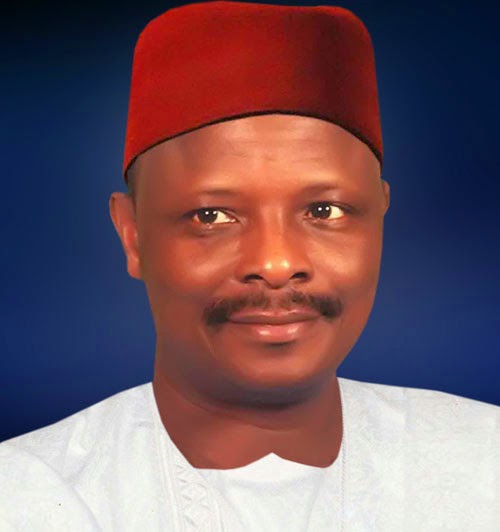

Buhari’s partisans will argue that the party leadership ought to do all it can to ensure Buhari clinches the ticket since he can pull in the numbers. But Atiku and Kwankwaso could counter that the ability to sway delegates in the primaries is not to be scoffed at. It is, after all, a predictor of the ability to mobilize the ground troops for the general elections. They will also point at the rather limited geography of Buhari’s appeal. Having 12 million votes is of no consequence if they are sequestered almost entirely in one region. They will observe that Buhari, despite his adoring legions, has lost thrice to three different ruling party candidates in a decade, and quite rightly suggest that a persistent defect in his brand, whether perceptual or actual, makes him nationally unelectable.

Certain actors within the APC would prefer a “bloodless” non-acrimonious primary process in which Atiku and Kwankwaso step down for Buhari. This is unlikely and Kwankwaso has already reportedly rebuffed overtures to concede the ticket to Buhari. This is fair. The APC needs an open primary contest if it is to avoid self-destructive internecine recrimination afterwards and its leadership will have to avoid the temptation to stage a victory for a favoured contender. From all indications, the primaries will be keenly contested. What happens next will be interesting. 


  Images sourced from  (in order of appearance)
www.today.ng 
www.ynaija.com 
www.dailypost.ng
www.kanopillars.com   

Sunday, July 10, 2011

Presidential Power and Its Discontents II


Apart from his personal limitations, President Jonathan also faces systemic constraints. The constitution stipulates that the president must appoint a minister from each of the 36 states. Given that the constitution already provides for a bicameral legislature as well as a majoritarian presidency that embodies the will of the greatest number of Nigerians, having a minister from each state is superfluous. For one thing, it adds to the bloat of government. For another, it unnecessarily bestows on ministers a representative function that properly belongs to the National Assembly. The ministers belong to the executive branch whose mandate is to execute. The National Assembly scrutinizes what and how the executive is executing.  
Ideally, a president could appoint all or most of his ministers from any state. Where they come from is inconsequential. Performance should be the only yardstick for judging their conduct.

Clearly, the constitution’s framers doubted that politicians would act fairly if allowed to freely select their ministers without any regulatory constraint. The stipulation emanated from a legitimate concern with ensuring fairness in the distribution of government posts. However, politicians now use the constitution’s concern for representational equity as a basis for patronage by insisting that state governors nominate candidates to represent their states in the federal cabinet. The result is a systemic paradox that cripples presidential decision-making.
                        
A representative cabinet evokes the collegial atmospherics of a parliamentary system’s dynamic of shared responsibility but it is illusory. By appearing to incorporate collective responsibility into our presidential system, we have inherited the worst of both worlds – a limited liability presidency where the president has great power but can distribute culpability for failures among ministers whom he can legitimately claim were foisted on him; and a nominally representative council of ministers constituted by politicians who typically represent only themselves and their political benefactors, and who are rarely competent enough to execute. Their loyalties are frequently divided between the president who appointed them and the godfathers who nominated them.

The president, who must define his administration’s mission, finds himself working with lieutenants that owe him less than total allegiance. Consequently, the unity of command and purpose that should characterize presidential governance is often lacking. The operational swiftness that comes from executive cohesion is distinctly absent. If ever a mode of government was designed to fail, this is it. But this is not solely a constitutional flaw. The constitutional requirement of 36 ministers is bad enough, but opportunistic politicians exploit it for pork barrel politics and subvert the executive responsibility ethic of presidential democracy.  In practice, it is an equal opportunity kleptocracy as a perverse brand of affirmative action.

Thus, one of a president’s most arduous struggles is to assert ownership of his presidency by picking his own team. President Shehu Shagari surrendered his cabinet appointments to the prebendal calculations of his party and lost control of his administration. Obasanjo’s absolute grip on his presidency enabled him pursue his reform agenda. A major concern is that Jonathan conceded too much to governors and other interests in constituting his cabinet.

Will the president’s languid style be enough to manage his cabinet and umpire the potential friction, for instance, between the Finance minister, Ngozi Okonjo-Iweala who has unprecedented latitude over economic matters and the Petroleum minister, Diezani Allison-Madueke who directly oversees Nigeria’s cash cow? Both women technocrats are strong personalities and lay claim to primacy in the administration’s cosmology – Allison-Madueke as a presidential favourite and confidante and Okonjo-Iweala as Jonathan’s economic czarina and guarantor of international credibility for his economic agenda.

Presidents must quickly assert their authority over special interests. They must show that, in General Ibrahim Babangida’s words, they “are not only in office but also in power.” Shagari was unable to curb his party’s profligacy and was overshadowed by the powerful rice importation czar Umaru Dikko. Obasanjo retired military officers who had held political appointments in previous military dictatorships thus securing his administration against the wiles of a politicized military. President Yar’Adua attempted the same by firing Obasanjo-era centurions like Nasir El-Rufai and Nuhu Ribadu who were deemed too powerful but his presidency was hobbled by the influence of fiendish cronies like Michael Aondoakaa and James Ibori.

Asserting his leadership will require Jonathan to defy influential interests as well as power blocs within the PDP, the National Assembly and the increasingly powerful governors’ forum. His vaunted transformational agenda cannot thrive in the nursery of politics as usual. Jonathan’s strengths are as a conciliator and a dealmaker. His natural instinct is to please everyone in the room and harmonize opposing forces often by redistributing portions of the national cake. “I have no enemies to fight,” he said constantly in the course of his campaign. However, at this point in our history, a pacific temperament guiding the presidency is not always a virtue. In fact, Nigeria has enemies that have to be fought and the presidency is a sovereign weapon fashioned to actualize the possibilities of our republic. When a president with convictions brings the moral, institutional and political weight of his office to bear on an issue, things get done. But the presidency is a blunt sword in the hands of the feckless, cowardly, pork-sharing pacifism often relished by Nigerian politicians.

Precisely because the presidency is so powerful, it either possesses its occupant or is possessed by him. Obasanjo’s military background predisposed him towards autocratic behaviour that often injured our institutions. For reluctant leaders like Shagari and Yar’Adua, the presidency was a black hole that swallowed them alive, leaving their aides to indulge in unhinged delinquency. Could Jonathan find the golden mean in the exercise of presidential power?

Psychology offers ample reason for apprehension. Confronted by contemptuous rivals as well as rising extremism and terrorism, Jonathan may be tempted to overcompensate for his perceived weakness by delving into the presidential armoury of repressive devices. He could be persuaded by hawkish political operatives to adopt more authoritarian measures to deal with dissent in the guise of a tougher posture on law and order.

Some politicians are temperamentally unsuited for the presidency. Shagari, who had been schooled in the conciliatory craft of parliamentary governance during the First Republic, seemed distinctly uncomfortable with presidential power. Remarking upon Shagari’s famed lifelong ambivalence about seeking office, his biographer David Williams wrote, “He has never sought high office; it has always been thrust upon him…his own ambitions have been for useful but narrow offices.” Shagari attributed this reticence to his deep distrust “of secular power” and his belief that “whoever lusts for political leadership should be rebuffed.” But he also believed that “whoever the community asks to lead is duty bound to accept the invitation.” This self-effacing modesty is incompatible with presidential power.

As Stanley Macebuh wrote ten days after Shagari’s inauguration in 1979, “Only those congenitally desirous of power can be comfortable with the prospect of the degree of loneliness which every president must live with. Prime ministerial government has at least the advantage of collegiality. The prime minister can share responsibility with his colleagues, if not with the legislature, when things go wrong. But a president has no one else to blame when he makes disastrous mistakes.” Shagari, he observed, “had not shown any great desire for the sort of imperial power that could compensate for his inevitable loneliness.” Successful leaders embrace the solitude that comes from not seeking to please every interest.

Of course, seeking power is not a sin. What matters is whether one perceives power as an ultimate goal and therefore as something to be worshipped and pursued at any and all costs, or as a tool, a means to an end, regulated by a high moral purpose. Power without purpose and vision is the chronic affliction of Nigerian governance.  

Shagari’s preference for a communal draft rather than an individual’s voluntary pursuit of power has since become a template for leadership selection. It casts politicians as reluctant messiahs beseeched by benighted communities to undertake their deliverance. Not only does this create a dangerous dependency on the president, it inverts democratic responsibility by indebting the people to the government instead of holding government accountable to the people. The tragic irony is that Nigerian politics often anoints those who possess neither the desire nor the equipment for public office while relegating the ambitious and the prepared to the political wilderness.

Political fortune seems to consistently favour the unprepared and the unwilling. Yar’Adua was poised to take a university teaching appointment before Obasanjo virtually conscripted him into the presidential race in 2007. Obasanjo himself had described his invitation to run for the presidency by several retired generals and politicians shortly after his release from prison in 1998 as an “ambush.” It took a first term of trial and error for him to establish an agenda for his second term and assemble a team of able lieutenants. However, Jonathan does not have the luxury of a probationary period. 

Sunday, July 3, 2011

Presidential Power and Its Discontents I


Goodluck Jonathan won the presidency chiefly on the strength of three things: an engaging narrative, the vast resources that inhered in his incumbency and a genial non-threatening persona that endeared him to far more Nigerians than his rivals could manage. Jonathan’s feel-good “anyone can be president” narrative mattered. His implausible ascent from bureaucratic anonymity to the political pinnacle in just over a decade marked with preternatural good fortune resonated in a society that loves miracles. In recent times, only Olusegun Obasanjo’s march from prison to presidency in the space of a year offered similar thrills.

However the skills required for a successful presidential campaign are acutely different from those necessary for a successful presidency. The shape-shifting equivocations, chameleonic posturing, intentional vagueness, expansive accommodation of all interests and infinite promises that pave the path to the presidency are actually incompatible with running the office. The president cannot long remain “all things to all men” as in the campaign. In time, his actions must reveal where the needle of his internal compass is pointing. The presidency itself calls for decisiveness, clarity, single-minded focus, and the distillation of broad, imprecise agendas into specific deliverables. The transition from campaigning to governing has to be swift and seamless.  

Jonathan’s challenges are equal parts personal as well as systemic. His public career yields no oral or written records of strongly and consistently held positions on the pressing national issues he must now contend with. Jonathan was picked as Vice President to President Umar Musa Yar’Adua because as an Ijaw, it was presumed that his presence on the ticket would placate the restive youths of the Niger Delta. But his thoughts on the great cause célèbre of Niger Delta militancy – resource control, and its ancillary concept, fiscal federalism – are cloudy at best.

His ideological and philosophical orientations, if any, are unclear. He comes across less as a person of conviction than as an opportunist whose ethics are entirely situational, contingent upon circumstances, and directed by expediency rather than conscience. During his campaign, Jonathan vowed to transform Nigeria but transformative leadership is enabled by deeply held political convictions of which Jonathan appears genuinely bereft.

As far back as the 1980s, Olusegun Obasanjo had advocated a one-party system for Nigeria and argued its advantages in writing and in lectures. Thus, the way he ran both the presidency and his party reflected his core belief in the efficacy of a one-party state. The moral credentials of the belief itself are inconsequential to our inquiry. The point is that Obasanjo came to the office with some convictions and they shaped the way he wielded the presidency.

In Jonathan, we have a president who might have to hurriedly and belatedly develop core beliefs. When a leader has no convictions, it typically indicates either a lack of prior intellectual investment in grasping national issues or a congenital infidelity to principle – neither of which can possibly generate transformative outcomes. At best, he could be a pragmatist.       

This is surely not an unfair assessment. Jonathan had effectively been president for over a year before his own inauguration. His ideological vagueness has already created the first signs of policy incoherence. Weeks after his inauguration, he ordered cement manufacturers to reduce their prices or face unspecified sanctions. That decree would seem to indicate a preference for bold governmental activism to modulate the interplay of market forces. Yet, it conflicts with a liberalized economic regime in which the government plays no role, let alone setting commodity prices by fiat.

Jonathan has previously indicated that his administration will pursue a private sector-led free market order. He is currently overseeing the privatization of the power sector and at the January PDP convention promised that the establishment of forty new federal universities would be primarily private sector-driven. To seal his fidelity to markets, he has penciled down Ngozi Okonjo-Iweala, the internationally reputed neoliberal economic technician for a second tour of duty as finance minister after her first stint during the Obasanjo years. In a recent speech in which Jonathan asked Nigerians to brace themselves for tough economic measures, he managed to sound both protectionist and liberal at the same time. 

The question of the president’s true ideological colours inevitably arises. Is he a free market enthusiast, a believer in state economic activism or something in between? If he subscribes to a third way doctrine, some kind of “Jonathanomics,” it is yet to be articulated. Is it possible also that he has no preferences at all and acts out of convenience, out of a sense of the moment? These questions matter because they will affect the tone of his government and policy-making. In the absence of any discernible core values, politicians tend to dance between crass opportunism and fickle populism. But a serious government simply cannot function this way.

The evidence thus far suggests that the president lacks the intellectual and emotional commitment to his own economic agenda required to sell it to the public and to engage the special interests that oppose liberalization. They also predict a scenario in which the president either stalls his economic agenda at the first sign of serious opposition or simply cedes full control (and culpability) over economic matters to his finance minister as a means of evading executive responsibility.

The president’s shape-shifting has already resulted in an early political defeat. In repudiating the PDP’s power rotation (“zoning”) arrangement to run for the presidency, Jonathan hinged his candidacy on constitutionalism as well as the need to overcome divisive ethnic politics and entrench merit in leadership selection. He struck patriotic high notes implying that his presidency signaled the beginning of a new nationalistic and post-sectarian meritocracy in our politics. But after his inauguration, Jonathan reaffirmed zoning while trying to engineer the election of his favourites in the House of Representatives. The move failed. The representatives rebuffed the president’s overtures and elected leaders of their choice. The episode left the president looking like an opportunist who had abandoned zoning when it suited him only to resurrect it for his own selfish purposes. His blatant interference in the internal workings of the house carried out through the instrumentality of the party violated the national assembly’s autonomy and the principle of checks and balances. Its defeat has left him smaller in stature.

Presidential stature is important. Jonathan faces a host of adversaries including a coterie of implacable northern elites who see his presidency as an usurpation of their right to rule and an anarchist terrorist group, Boko Haram, which has declared war on the federal government. To adequately combat these onerous challenges, he has to look to a moral compass rather than the weathervane of expediency. Strength will come from conviction and conscience, rather than convenience. The president must choose his political battles carefully so as to avoid further diminution of his stature. His opponents are sure to quickly capitalize on any signs of weakness on his part.

Jonathan’s understated personality already invites underestimation by political adversaries. Ordinarily, this assessment of a politician who has just clinched the presidency ought to go down as a fatal miscalculation. But because his understated personality evidently does not mask any cast iron principles or keenly held ideas, he is all the more likely to be accurately adjudged as weak. Encouraged by this, special interests are sure to launch niggling nuisance assaults on his presidency in a bid to extract concessions from him. Indeed, extremist groups like Boko Haram will feel emboldened to continue their campaign of terror by what they will see as the president’s lack of resolve (not to mention the government’s lack of adequate armaments).

After the post-election violence in April, Jonathan gave one of his best speeches and among other sterling pronouncements, declared, “Nobody’s political ambition is worth the blood of any Nigerian.” But such lofty rhetoric has not been used to craft a new national security doctrine although it should have been obvious since the October 1, 2010 bombings in Abuja that our most urgent national security threat comes from non-state actors. 

All this predicts an embattled presidency besieged by ravenous lobbyists and assailed by cold-hearted opponents; one that will more often than not be on the defensive and more consumed with putting out fires rather than actually getting things done. Jonathan can prevent this quagmire by defining a set of minimum non-negotiable core values that will undergird his administration. These are the values which he must expend political capital to promote and by which he will consistently assert his leadership.  It is necessary but it will not be easy. The presidential virtues of strength and resolve can only be constructed on prior foundational convictions.

By electing Jonathan, it may be said that Nigerians voted for symbolic change, choosing the cosmetic novelty of the fedora hat over the tiresome familiarity of the Shagari cap. Whether Jonathan can transform the symbolism of his presidency into real systemic changes is another matter.

Tuesday, May 31, 2011

Mr President, What is Your Message?


When Senator Chuba Okadigbo complained some years ago that three years of the Olusegun Obasanjo administration had yielded “no quotable quotes,” he was lamenting the inspiration deficit of Nigerian leaders. Listening to President Goodluck Jonathan’s inaugural speech, I was struck yet again by how abjectly bereft of inspirational powers most of Nigeria’s top politicians are. An inaugural speech is traditionally a defining proclamation of a president’s agenda. What we heard on inauguration day was a drab, colourless, soporific recital unworthy of recall. It left no memorable fragments to warm the heart or quicken the spirit. It was forgettable and I would wager that few if any Nigerians can recall any part of that address.

President Jonathan’s oratorical challenges have long been obvious. He was not the most eloquent of the four main contenders for the presidency. (In fairness, his closest rival in the election is possibly an even worse speaker). Jonathan’s predecessors, the grumpy, gravelly-voiced Obasanjo and the dour Umar Yar’Adua were far from stellar public speakers. The problem goes beyond eloquence. It speaks to the inability of leaders to inspire Nigerians with their words.

In fact, this is a contradiction of our political traditions. The nationalists of yore considered rhetorical sophistication an essential part of their political arsenal. In our indigenous cultures, the art of eloquence and the spoken word was a key part of education for public life. The nostrums of our culture were orally transmitted. The creative and destructive power of words is recognized in African moral traditions. “Proverbs are the palm oil with which words are eaten,” Chinua Achebe wrote. His axiom conveyed the truth that in African culture, the spoken word was a form of spiritual and mental nourishment. Accordingly, the nationalists practised oratory as the dispensation of soul food. Nnamdi Azikiwe, Aminu Kano, Kingsley Mbadiwe, Mbonu Ojike, Adegoke Adelabu, Mokwugo Okoye, Raji Abdallah among others were renowned for their fluency. Our first Prime Minister Abubakar Tafawa Balewa was acclaimed as “the golden voice of Africa.”    

I believe that military intervention which ruptured the liberal tradition and inseminated Nigerian history with a lineage of soldiers more accustomed to barking commands and decrees than winning hearts and minds through the power of persuasion is partly to blame. Even so, among the soldiers, Emeka Odumegwu-Ojukwu and Murtala Mohammed were notably fiery speakers. Simply wearing khaki does not impede eloquence.

The oratorical limitation of our leading politicians also has a great deal to do with the context of elite selection. The nationalists had to rally multitudes to their cause in order to gain political significance, whereas political leadership today does not depend so much on inspiring multitudes as on buying the favours of godfathers. It is less about persuading the electorate than placating special interests. The absence of a real public debate before the polls between the leading presidential contenders denied Nigerians the opportunity of seeing them match wits against each other. Instead of watching the aspirants to the most significant office in the black world arguing their respective cases for leadership, we had to settle for a dire presidential monologue. If you never have to make a case for your leadership before the people, then your ability to inspire their confidence at any other time will be nil.

It is significant that many of the most powerful public speakers in Nigeria today are either pastors or imams. Their leadership, being devoid of any coercive sanction, rests entirely on their ability to persuade, to inspire voluntary loyalty. If they cannot speak to the inner consciousness, they rapidly lose their audiences. There is a reason why the numbers that fill our crusade and prayer grounds have yet to be matched by any voluntary gathering for a party rally. Multitudes still drift towards the wells of inspiration and words fitly spoken still set hearts aflame. In these days of religious extremism, the president and many politicians are in a rhetorical contest for hearts and minds with charlatans who use their influence over the multitudes for evil.        

The ability to inspire people matters, especially since the task before us is mobilizing Nigerians with a sense of common purpose. It will take the right words to resurrect people from tribal tombs and raise them to a new level of national consciousness. It will take inspiration to pierce through the veils of cynicism and pessimism that separate the citizenry from the leadership. It takes rhetoric to build bridges of empathy to connect the powerless with the powerful. It will take rhetoric to motivate Nigeria’s teeming young population, many of whom are without jobs and see no prospects for the future.  

The power to inspire and influence is basically rooted in conviction. People are more likely to follow leaders who display passion. It has been a long time since a Nigerian leader displayed fervency. Murtala was not a rhetorician in the league of the nationalists but his fervour was undeniable. His ‘Africa Has Come of Age’ speech was memorable not just for its words but also for the passion with which he delivered it in 1976 at Addis Ababa. Nigerians remember his time in office as one of governmental resolve largely because of his ardour.

We have yet to decipher what Jonathan stands for and what ideas command his passions. He has no record of strongly-held positions, either oral or written, on any of our pressing national issues. Even his repudiation of the PDP’s zoning arrangement which some had hoped would be a springboard for asserting a new post-sectarian meritocracy in our politics has turned out to be opportunism with the president now reaffirming zoning. His inaugural address was replete with the usual clichés about “patriotism” and “resilience” and getting “Nigerians to dream again.” But presidential sermonizing on patriotism would be more compelling if it were delivered with conviction. There is as yet no message or big idea, no core value or principle around which the president can mobilize Nigerians.

In a presidential democracy, the centrality of the chief executive means that the president is the prime town-crier, the nation’s narrator and storyteller-in-chief. We look up to him to put our times in historical context, to instruct us as to where we are going as a nation and to create a dramatic symmetry between our collective past, present and future. When the president speaks, it should be with oracular gravity. As such, legitimate criticism may be leveled against the president’s speech writers. The inaugural speech failed to strike the right chords even when dealing with the historic significance of being the first Nigerian from an ethnic minority to assume the presidency. Sometimes, even when assailed by stilted and wooden delivery, the right words uttered at the right moment can do a profound work – but the president had no ammunition.

Of course, eloquence is not everything. For instance, it is not a substitute for character. Adolf Hitler was charismatic and eloquent. In the last elections, Kano State Governor Ibrahim Shekarau impressed many watchers as the most articulate of the main contenders. But his performance in Kano did not quite rise to the level of his rhetoric. There are some who might argue that the president can compensate for his oratorical limitations with his character and competence. That remains to be seen.

Still, a measure of eloquence matters. A dexterous public communicator can translate a crisis into an opportunity for national self-transcendence. In times of crisis, leaders come forth to give utterance to the groans of their people. Nigeria is in crisis and requires voices to articulate its yearnings. Some would say that it is asking too much for Nigerian politicians to sound like Barack Obama or Tony Blair. This view not only contains a derogatory insistence that we keep accepting the average, but misses the point. Azikiwe thought that leadership should be reserved for an aristocracy of intelligence and Obafemi Awolowo wrote that only those who possessed “mental magnitude” were fit to lead Nigeria. Alas, Nigerian leadership has plummeted from those lofty standards.  We can refer to the nationalists because there was a time when politics was about words and ideas not just cash, bags of rice or frivolous pageantry. The president has to raise his game.

The Nigerian presidency is not merely the leadership of a small West African country; it is the leadership of a quarter of the black race. There are more Nigerians on this planet than Britons, Germans or the French. A Nigerian president is well-positioned to champion Africa and the black world’s cause in the conclaves of the world’s most powerful nations. It is important therefore that we begin to raise our standards in terms of what we expect of our leaders. The quality of a nation’s leaders is directly connected to the public expectation and definition of leadership. The time for settling for the barely average and tempering merit with mediocrity is over. The 21st century will punish us harshly if we persist in doing so.     

Thursday, April 21, 2011

Buhari's Last Testament


The Congress for Progressive Change is something of a populist movement with its presidential candidate, Muhammadu Buhari, as the symbolic vessel of northern underclass angst and radical discontent. Much of this fury is not directed at President Goodluck Jonathan personally but at a national confederacy involving northern elites that has left the north impoverished. The ferocious support for the CPC in the ghettos and slums of the north is therefore a protest movement against a generation of northern oligarchs which has gained influence and affluence while misery and privation have proliferated in the region. Jonathan’s emergence is only a convenient trigger for the rage of the talakawa.

Buhari’s limitations as a politician, ideologue and communicator prevented him from framing the inarticulate groans of the talakawa in a broader grammar of national liberation politics as Aminu Kano, Sa’ad Zungur, Bala Usman, Balarabe Musa and others did before him. These were the luminaries of a northern progressive tradition that has roots in socialism and in the egalitarian preachments of Uthman Dan Fodio. This tradition has been remorselessly assailed to the point of near extinction by the conservative oligarchs. In the absence of progressive voices calling for social justice in the north, groups like the anarchist Islamist sect Boko Haram have emerged.

Where opportunities for social progress are denied, agencies of regress evolve. If the talakawa are denied opportunities to prosper in the 21st century, they are seduced by merchants of chaos preaching the merits of a 7th century Islamic utopia. If the present and the future hold no hope for the seething millions of uneducated and unskilled young males in the slums of the north, then a mythical past becomes more appealing. This is the secret of the allure of fundamentalists who preach a return to an idyllic pre-modern paradise – a return to statelessness since the state is deemed to have failed.


Buhari’s and the CPC’s failings left the party desperately unable to transcend its limiting definition as the party of glass-eyed mobs in the northern suburbs. With proper organization, the CPC may have been able to harness the rage coursing through northern slums to build a constructive opposition to the status quo. Instead, the party will now be terminally defined by the scenes of its supporters burning, killing and maiming, fulfilling the resilient stereotype of ‘the angry northern Muslim mob’ that scares so many Nigerians. Without critical orientation, the party has been reduced to the most primal manifestation of political violence – that rooted in religious differences. This is a pity but perhaps it was to be expected of a party that was apparently solely set up to facilitate Buhari’s pursuit of the presidency.

To be fair, Buhari is no religious extremist but he is uncharismatic, serious, and hopelessly oblivious to how he is perceived by many Nigerians. His record of addressing sectarian violence has been atrocious for one who aspires to national leadership. He seemed happy to milk his popularity with the talakawa, not worrying that their evident ownership of his candidacy was casting him as a sectional champion. He did little to counter his brand as a “defender of the faithful” even though a candidacy charged with such religious meaning is incompatible with the egalitarian settings of democratic contest, and particularly dangerous given our history of divisive politics.

Religion makes absolutist claims about the will of God. Democratic politics is about the supremacy of the popular will. Both claims cannot mix without perilous consequences. As we have seen, when a messiah is defeated at the polls, his disciples interpret it as apostasy and launch a violent inquisition to root out the infidels. This is the meaning of the post-election meltdown in northern suburbs which saw CPC supporters attack homes of Christians who were simply assumed to be PDP supporters and also attack Muslims who voted for the PDP.

It is difficult to believe that the ecstatic mobs at CPC rallies failed to intimate Buhari of the possibility of violent protest by his supporters in the event of his defeat. It was an outcome that could have been avoided or at least minimized. Buhari and his party must accept some culpability. He and the CPC dissociated themselves from the mayhem but it was too little, too late. True, we cannot blame all the violence on the CPC but the tenor of Buhari’s campaign in the north was like a spark to dry tinder. He, of course, has the right to feel disappointed by his electoral fortunes. But his refusal to concede defeat and his decision to challenge the poll results has cemented a reputation for gracelessness unbecoming of a democrat.

Since the days of Ahmadu Bello, northern politics has been a continuing search for a moral champion – a political quest for the twelfth Imam. Even Aminu Kano often framed his progressive socialist preachments in the syntax of Islamic liberation theology. Yet over the decades as Northern Nigeria has reeled from sectarian wars, the place of religion in public life has become contentious. In appropriating the rapturous ecstasies of the northern underclass, Buhari succumbed to the temptation to be a spiritual talisman and undercut his claims to national leadership. This was partly strategic. Financially outmuscled by its rivals, the PDP and the Action Congress, the CPC sought to compensate by whipping its northern base into a populist frenzy. Maigaskiya, (person of truth) the honorific bestowed upon him by this constituency, reflected the esteem in which they held him. Their love was insufficient to fetch him the presidency.

The main lesson of Nigerian politics, which opposition parties have repeatedly failed to learn, is that no party clinches the presidency by appealing solely or mostly to its provincial base. In fact, it is possible for a candidate to win without his home zone as Obasanjo proved in 1999. The victorious candidate is the one who can go beyond his homestead and build broad national coalitions. This is historically what the establishment parties – the Northern People’s Congress, the National Party of Nigeria and now the Peoples Democratic Party – have been good at doing. It is why Shagari fairly defeated Awolowo in 1979 and why Abiola defeated Bashir Tofa in 1993. (In fact, in 1979, Shagari won more votes in Rivers and Benue than in his native Sokoto) It is why Buhari has been losing since 2003. In contrast, the failed merger of the CPC and the AC illustrates the handicap of the opposition. The fact that CPC voters in the south have held their peace, while those in the north went on rampage shows the geographical location of the party’s soul. Buhari’s popularity in sections of the north, while unquestionable, was an insufficient basis for a national victory, especially given his reputational, financial and organizational deficits. Nigeria is a far more complex proposition than the fallacious “Christian south-Muslim North” formulation customarily used to explain our politics.   

In a bid to pacify the ‘north,’ President Jonathan may try to forge a consensus with the discredited old guard oligarchs. Ironically, these elites despise the puritanical and uncompromising Buhari, and would sooner negotiate with Jonathan so long as business continues as usual. Should Jonathan pursue this course, he risks being identified more closely with the problematic personalities of the north and reaping even more of the ire of the underclass. Instead Jonathan is better off cultivating a new generation of northern progressives to implement the rescue of the region from poverty. Jonathan’s emergence has sealed the retirement of the geriatric northern elites who have spoken for the region for the past forty years. Their failed politics of entitlement has reduced the north to a zone of misery. There is an opportunity here to inaugurate a new conversation about the north centred on people-oriented development instead of elite privilege.


Regardless of its showing in the gubernatorial elections, the CPC does not seem to have a long term future. Without Buhari’s halo, the party is simply an unwieldy aggregation of political outsiders and malcontents from other parties, all hoping that their proximity to Buhari may yield an anointing by association. With the general’s halo, the party is simply a personality cult. Nigerians who voted for Buhari had high hopes, but on hindsight, the CPC was always a poor vehicle for national change. The search for truly transformative alternatives will have to continue. In any case, the talakawa crisis remains a grave plague that we must confront as a society. Any viable opposition movement must tame the north’s feral ghettoes and translate the fury therein into transformative democratic energy.

As a 69-year old former military dictator, Buhari was always an implausible candidate of change. Most Nigerians had either not been born or were in their early childhood when he ruled. It should be clear now that his three abortive presidential bids have as much if not more to do with a fundamental lack of national acceptability than with the much vaunted rigging of the ruling party. He belongs to a generation that has long exhausted its potential. He should just go quietly into the night.  

Friday, April 15, 2011

Change We Can't Believe In


In our complex, plural, often fractious society with various mutually-suspicious interest groups, you do not win the presidency by being (or appearing) visionary or radical. You do so by looking harmless, passive and unthreatening. You do not win the presidency by serving up a revolutionary manifesto or rigorously grappling with issues; you do so by affecting a genial cluelessness. You win by demonstrating an extraordinary capacity to regurgitate stale clichés and to utter the bleeding obvious with an air of intellectual profundity. This is the true genius of successful presidential aspirants and it is sadly reflective of where our politics has calcified at the moment.

Muhammadu Buhari looks too threatening to win the presidency. Behind the stern mien lurks a seething moral zealotry and a righteous indignation at what his country has become. During his term as Head of State that zealotry came to the fore when armed with repressive decrees, his regime declared a war on corruption, handed out hefty jail terms to corrupt politicians and attempted to frog march the country into the future. Buhari’s running mate is Tunde Bakare, a pastor, attorney and activist who earned his stripes as a preacher railing against the materialistic excesses of Nigeria’s Pentecostal elites and thundering against official corruption. Thus the Buhari-Bakare ticket is led by two puritans…and two authoritarians, for the Pentecostal movement is an authoritarian institution and its pastors tend to be totalitarian oracles.


Whether a ticket led by two men of authoritarian disposition can deepen democratic habits is a fair question. But Buhari is feared for other reasons. The fanatical support he enjoys from swooning and ecstatic mobs in the north scares many southerners who fear that the ex-general is a closet religious extremist. This allegation owes less to reality than to a smear campaign against the general mounted by President Obasanjo’s minions during the 2003 polls. Buhari has tried to counter this fear but clearly deems it beneath his stature to address such canards. The cruel irony is that in a bid to dispel his sectarian image, he has been forced to play “religious politics” by picking a pastor of questionable political clout as his running mate. Whether this will assuage fears remains to be seen.  More importantly, many elites fear that a President Buhari will resume his war on graft after a 26-year hiatus with renewed vigour. For all his grassroots support especially among the northern underclass and others who see him as a potential change agent, Buhari simply frightens too many people – people who could otherwise be valuable supporters.

Nuhu Ribadu suffers from basically the same limitations as Buhari. The former police officer made scores of powerful enemies during his term as anti-corruption czar when he hunted down several high profile fraudsters and thieving politicians. Ribadu is seen as embodying the promise of the independence generation (those born in the 1960s) and has attracted many young urban middle class professionals to his campaign. But Ribadu has lost the toga of incorruptibility to Buhari and is now running solely on youthful promise and potential. Even so, Ribadu can at least look to the future, but for Buhari, 69, this is clearly his last presidential venture.

This leaves us with Goodluck Jonathan, the incumbent and frontrunner in the race for Aso Rock. Jonathan fulfils all the requirements for winning the presidency cited above. He is not a radical and has no record of any strong views on any subject. His placid demeanor, in contrast to say Obasanjo’s abrasive persona has made it impossible to cast him as a hate figure in the north even after he torpedoed the PDP’s zoning arrangement. He is clearly a deal-maker and a conciliator rather than a confrontational type. His unlikely ascent from obscurity resonates in a religious country as the stuff of pop religious mythology. His campaign has nimbly exploited this by portraying his rise as the quintessential Nigerian folktale – a man from provincial backwaters rising to be president aided by divine favour. And, as incumbent, he has a war chest of public and private resources surpassing anything his rivals can boast of.

Above all, Jonathan’s appeal lies in his novelty. As the first ethnic Ijaw to sit in Aso Rock, his presidency is a symbolic recompense for the long-neglected oil-producing region. His other names ‘Ebele’ and ‘Azikiwe’ have enabled him to skillfully appropriate the affections of the southeast. His appointment of the first Igbo army chief in 40 years has deepened those affections. For many, Jonathan’s presidency signals the reintegration of the south and southeast zones into the national project. It breaks the perceived northern hegemony of national leadership and conveys a sense that people from other parts of the country can aspire to the highest office in the land. In this regard, Jonathan’s presidency speaks to the deep-seated need for equity and justice in the Nigerian subconscious.

Ethnicity should not matter in our politics in 2011. But Jonathan’s rivals have acted as if it does not matter at all. They have failed to seriously interrogate the roots of Jonathan’s appeal, to grasp the sense of inequity and exclusion that sustains his popularity, and to make the case that their own governments could deliver more tangible goods to those that feel excluded as against the merely symbolic properties of a Jonathan presidency. Instead Buhari and Ribadu, betraying a tin-ear to the sentiments in the southeast and the Niger Delta, picked running mates from the southwest, leaving those two zones with no option on the field except the incumbent. Perhaps, in their calculus, those two zones were deemed unwinnable and thus conceded. The polls will prove this strategy right or wrong.

Yet, Jonathan has significant chinks in his presidential armour. His reign in Bayelsa was so anonymous that not even his handlers have used it to make a case for his presidency. His vice-presidency was largely nondescript. Jonathan has never won an election on his own steam, and his one year in Aso Rock has not dispelled the image of a man promoted beyond his competence by fate. His intellectual minimalism agrees with a society that disdains ideas and scorns men of thought. His handlers have trumpeted his PhD as though it is a Nobel Prize – a scandal in a country that produced Azikiwe, Awo, Aminu Kano, Ahmadu Bello, among others – in an age in which politics was for men of thought and erudition. A more demanding electorate would have scrutinized Jonathan’s claims to the presidency more closely.

As it stands, Jonathan’s campaign rests primarily on his incumbency yet he is yoked to the disastrous brand of his party, the PDP, whose 12 years in power have been appalling. He has built a personal brand and distanced himself from the party in the public consciousness. He has not cast his campaign as one of continuity but as “a breath of fresh air.” Thus placated, many Nigerians excuse him as a good man who just happens to be in a bad party. This is bollocks but it works for some and Jonathan is genuinely popular.

There is one last thing to his advantage. Oppositional figures do not fare well in Nigerian politics. If not, Awolowo, Aminu Kano, Gani Fawehinmi and Pat Utomi might have done better in their presidential adventures. We may romanticize mavericks and outsiders and crown them with such epitaphs as “the best president Nigeria never had” but we rarely validate them with votes. There are many reasons for this. Culturally, we venerate authority and so find the iconoclasm of democratic competition unnerving. Nigerians may disparage the ruling camp but would rather join it than oppose it. Under military rule, political and economic survival meant seeking accommodation with the establishment rather than challenging it. Nigerians still respect the establishment and prefer giving it a new veneer to discarding it. In this sense, our society is conservative. Jonathan and the PDP will benefit from this dynamic this year. Unfortunately, Buhari and Ribadu will suffer for it.

But there are signs that this sort of conservatism is ebbing away provoked by widespread disillusionment and the emergence of a new generation of Nigerians. Young voters, unburdened by memory and prejudice, are more likely to challenge the status quo. This is why the Action Congress and the Congress for Progressive Change have mounted such strong campaigns this term, and it holds great promise for the future. The opposition parties will achieve more in future if they venture out of their provincial strongholds with more conviction to build national networks.

Jonathan has been clever as a servant of the status quo posturing as a change agent. This weekend, most Nigerians will probably agree with his claims at the risk of choosing symbolic change over substantive transformation. His likely victory tells us where we are as a society.